
Hustler Words – Jedify, a New York-based startup, has successfully closed a $24 million Series A funding round, addressing a critical challenge in enterprise artificial intelligence. While AI vendors frequently market their products as "turnkey" solutions, the reality is that AI agents often fall short of immediate effectiveness. Without deep, tailored understanding of an organization’s unique operations—from internal terminology to specific data access rules—these agents struggle to perform optimally. This inherent lack of context often forces companies to deploy extensive engineering resources for integration, a costly and inefficient process Jedify aims to revolutionize.
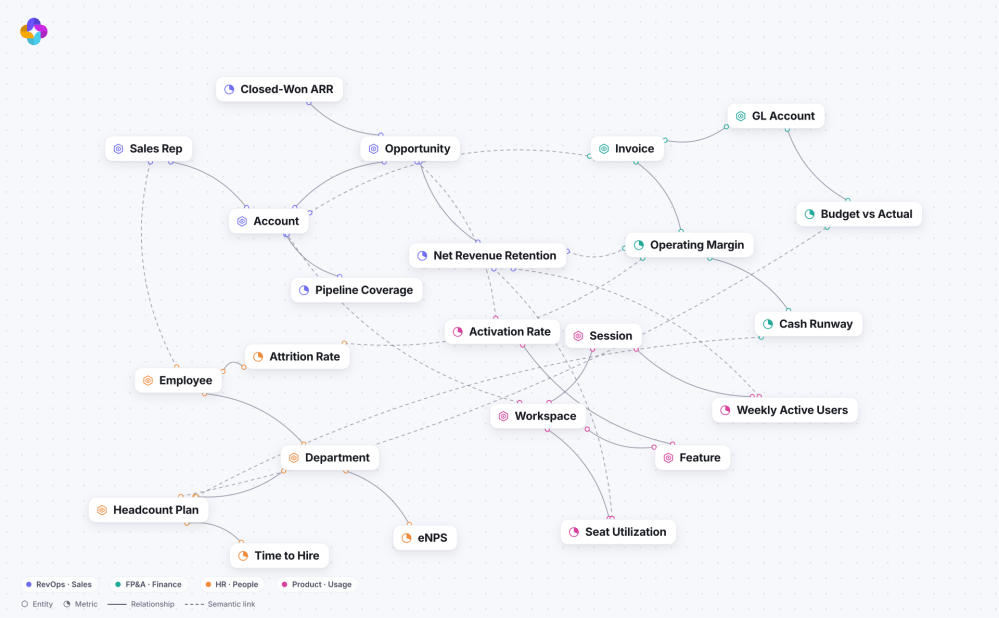
Jedify’s innovative platform tackles this very void by seamlessly connecting to an enterprise’s diverse knowledge sources via APIs. It then constructs a sophisticated "context graph," a dynamic and interconnected map of a business’s operational landscape. This graph furnishes AI agents with the precise, relevant information required to function intelligently. The system integrates with a wide array of data repositories, encompassing structured sources like databases, data warehouses, SaaS applications, and BI tools, alongside unstructured content such as internal reports, documentation, codebases, Slack communications, and even recorded meetings.
The significant $24 million Series A funding, exclusively reported by hustlerwords.com, was spearheaded by Norwest. The round saw robust participation from existing investors S Capital VC and Cerca Partners, joined by new entrant Oceans Ventures. Notably, data giant Snowflake also contributed as a strategic investor, signaling strong validation for Jedify’s approach. Snowflake plans to integrate Jedify’s technology into its own suite of AI offerings, including Cortex AI, Semantic Views, and CoWork, underscoring the strategic importance of this collaboration.

Related Post
At its core, Jedify’s value proposition centers on providing AI agents with a comprehensive understanding of an enterprise’s intricate web of relationships. This includes connections between various entities, datasets, access permissions, specialized domain knowledge, operational workflows, underlying assumptions, and proprietary terminology. By furnishing this granular context, Jedify enables AI agents to intelligently filter and prioritize information, focusing only on what is pertinent to a given task, rather than sifting through an entire organizational data sprawl.
Assaf Henkin, Jedify’s co-founder and CEO, offered Kiteworks, a compliance firm, as a prime illustration of their platform in action. Kiteworks integrated diverse data sources such as Snowflake, Tableau, Notion, and proprietary internal playbooks—encompassing documents and visual aids—into Jedify. This integration then facilitated the creation of specialized AI-powered tools tailored for distinct customer workflows. Henkin elaborated on the Kiteworks use case, stating, "Their objective was to equip their sales and account management teams with a sophisticated application, functioning as both a dynamic dashboard and a real-time conversational interface. When engaging with customers, Jedify dynamically assembles all necessary information. Furthermore, during these interactions, specific details can be proactively surfaced in real-time, significantly enhancing responsiveness and insight."
Henkin further asserted that Jedify’s context graph transcends the capabilities of conventional semantic layers, metadata catalogs, and existing knowledge graphs. Its distinction lies in its multi-dimensional nature, meticulously mapping relationships across entities, data, personnel, access rights, and customer interactions. Crucially, it operates as a model-agnostic solution, continuously updating in real-time as information traverses the integrated systems. "For truly autonomous agentic solutions, capable of driving decisions across disparate data streams like CRM records, support tickets, and real-time telemetry, a context graph offers significantly superior capabilities compared to a mere semantic layer," Henkin explained, emphasizing its critical role in advanced AI deployments.
A significant challenge in enterprise AI involves managing data permissions. To prevent scenarios like an AI agent inadvertently granting an intern access to sensitive financial projections, Jedify’s platform meticulously addresses this. It inherits granular access rules from existing identity systems, file systems, SaaS applications, and databases, including row-, column-, and table-level restrictions. Furthermore, it empowers customers to establish bespoke groups, precisely defining the scope of data and user access for agents or workflows. Integrated observability and governance tools provide assurance that AI agents operate strictly within their intended parameters.
Jedify is strategically focusing on mid-market and large enterprise clients, particularly those with sophisticated data infrastructures encompassing multiple databases and data warehouses. Henkin disclosed that the company has already secured between 10 and 20 initial customers, including notable names like The Weather Company. The platform is also generating considerable interest across data-intensive industries such as gaming, industrials, and consumer packaged goods.
The strategic investment and partnership with Snowflake carry considerable weight, especially given that major data platforms are actively developing comparable functionalities. However, Henkin posits that Jedify serves as a vital complement to these initiatives. He emphasizes that a substantial portion of an enterprise’s data, and indeed the majority of its invaluable institutional knowledge, rarely resides within the confines of a single cloud provider. "While large data corporations often advocate for consolidating all data onto their platforms, the practical reality for businesses involves a fragmented landscape of multiple databases, warehouses, and diverse data solutions," Henkin observed. "The crucial point is that not all critical data, and certainly not the bulk of an organization’s tacit knowledge, is housed within these singular environments, presenting a distinct limitation for such providers."
Henkin additionally highlighted the prohibitive costs associated with enterprises attempting to construct a similar context layer independently through AI model training. This challenge is exacerbated by the increasing scrutiny and restrictions companies are placing on their AI token consumption. The rapid evolution of AI model development underpins Jedify’s overarching strategy: as AI models become increasingly powerful and interchangeable, the proprietary, business-specific context that enables these models to perform optimally within an organization will emerge as an invaluable and enduring competitive advantage.
The newly secured capital will be strategically allocated towards accelerating product development, expanding the team through key hires, and bolstering the company’s go-to-market initiatives. This latest infusion elevates Jedify’s total funding to approximately $33 million.


Leave a Comment