
Hustler Words – A California administrative law judge has delivered a significant legal setback to Tesla, concluding that the electric vehicle manufacturer engaged in deceptive marketing practices regarding its Autopilot and Full Self-Driving (FSD) driver assistance systems. This landmark ruling, emerging from a protracted case initiated by the California Department of Motor Vehicles (DMV), asserts that Tesla’s promotional language fostered a false perception among consumers about the true capabilities of its advanced driver-assistance technologies.
The judge concurred with the DMV’s recommendation for a 30-day suspension of Tesla’s sales operations within California, alongside a similar halt to its manufacturing license. However, the DMV has opted to stay these punitive measures, granting Tesla a 60-day grace period to either revise or eliminate any misleading terminology from its marketing materials. Should Tesla comply, the suspensions will be rescinded. Steve Gordon, director of the DMV, underscored the department’s commitment to upholding rigorous safety standards for all vehicle manufacturers. "The DMV’s decision today confirms that the department will hold every vehicle manufacturer to the highest safety standards to keep California’s drivers, passengers and pedestrians protected," Gordon stated, adding that Tesla has clear steps to resolve the issue, akin to those taken by other innovators in California’s robust automotive market.
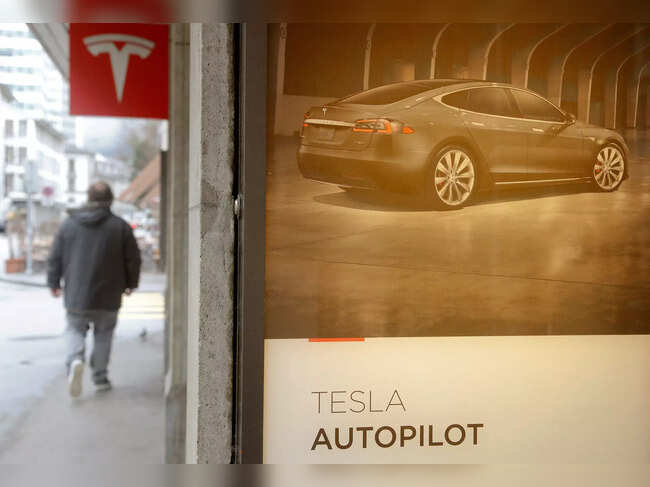
In response, Tesla posted on X, asserting that "Sales in California will continue uninterrupted." The company further characterized the order as a "consumer protection" directive, questioning its basis given the absence of direct customer complaints regarding the terms "Autopilot." The precise modifications the DMV expects from Tesla remain somewhat ambiguous, beyond a general directive to "take action regarding its use of the term ‘autopilot.’"

Related Post
This California ruling adds to a growing list of regulatory and legal challenges for Tesla concerning its autonomous driving claims. The company has previously faced scrutiny from the California Attorney General, the Department of Justice, and the Securities and Exchange Commission over similar allegations of misleading marketing for its partial autonomy systems. Furthermore, Tesla has settled several civil lawsuits stemming from accidents involving its Autopilot technology.
The DMV’s core argument throughout the multi-year administrative hearing has been that Tesla’s marketing led customers to believe its advanced driver assistance systems offered a higher level of autonomy than they actually possess. This alleged overconfidence, the DMV contends, has been a contributing factor in numerous collisions and multiple fatalities. Tesla, conversely, has maintained that its marketing communications are protected under free speech principles.
A temporary cessation of sales in California, Tesla’s largest U.S. market, could have substantial financial repercussions for the company. Similarly, a manufacturing suspension, even if brief, would impact its production capabilities. While Tesla has expanded its operations with a major factory in Austin, Texas, its Fremont, California plant remains critical, particularly for the production of hundreds of thousands of vehicles, including all North American-bound Model 3 sedans.
Coincidentally, this judicial decision emerges as Tesla intensifies its Robotaxi service pilot in Austin, Texas. The company recently removed safety monitors from its small fleet of autonomous vehicles operating in the city, which had been providing rides to customers for six months with human oversight. CEO Elon Musk has indicated that these Robotaxi vehicles operate on a distinct version of Tesla’s driving software compared to what is available to general consumers.


Leave a Comment