
Hustler Words – In a strategic move that raises eyebrows, Tesla has quietly retired its Autopilot system, the foundational driver-assistance package previously standard on its vehicles. This decision appears to be a calculated effort to accelerate the adoption of its more ambitious Full Self-Driving (FSD) software, now branded as "Supervised."
The timing of this change is particularly noteworthy, coinciding with a looming 30-day suspension of Tesla’s manufacturing and dealer licenses in California, its largest US market. This suspension stems from a December ruling where a judge determined that Tesla engaged in deceptive marketing practices by exaggerating the capabilities of both Autopilot and FSD for years. The California DMV, the plaintiff in the case, granted a 60-day stay, giving Tesla time to comply by dropping the Autopilot name.
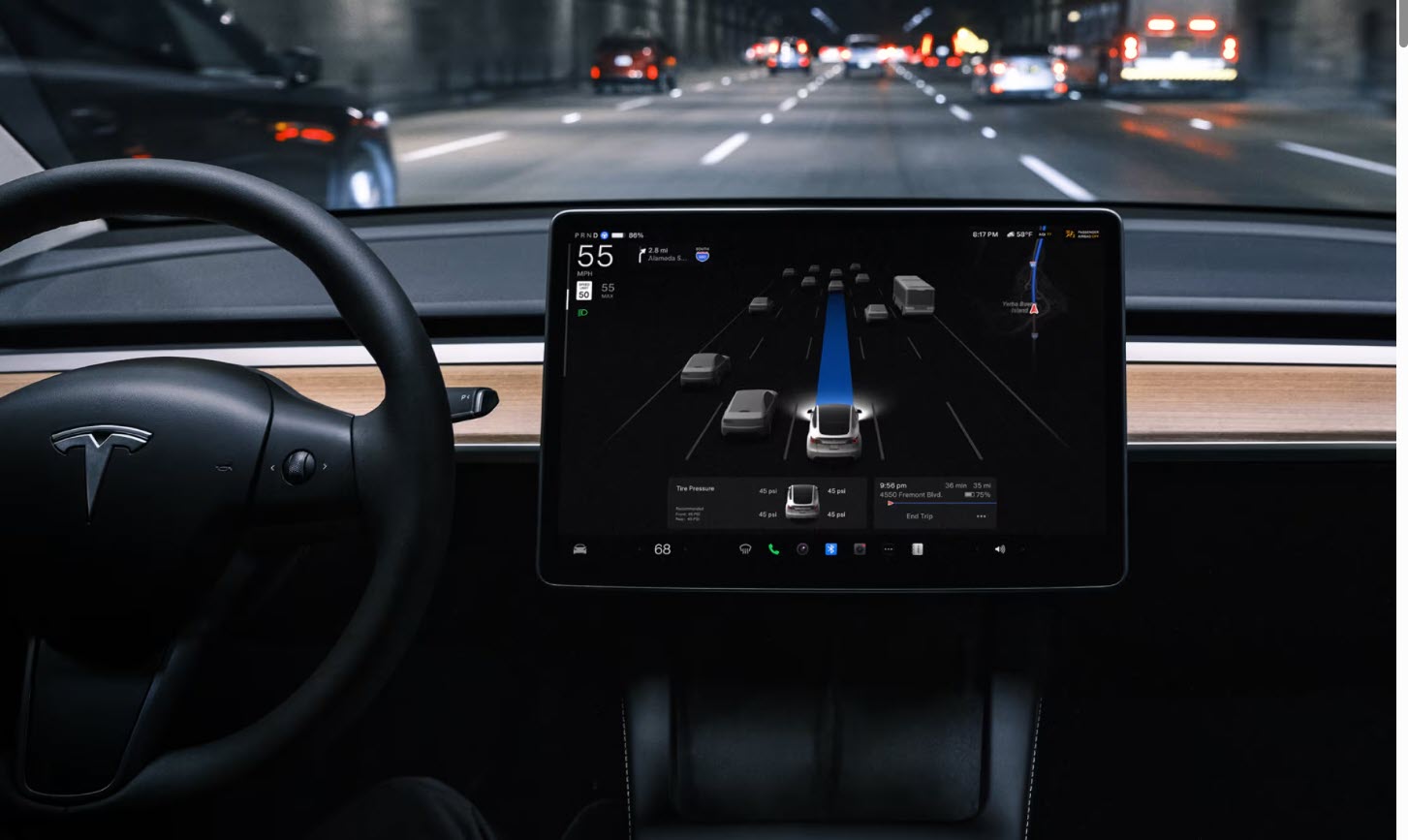
Autopilot essentially combined Traffic Aware Cruise Control, which maintains a set speed and distance from preceding vehicles, with Autosteer, a lane-centering feature designed to navigate curves. Tesla’s online configurator now indicates that new vehicles will only come standard with Traffic Aware Cruise Control. The impact on existing Tesla owners remains unclear.

Related Post
This shift follows Tesla’s recent announcement that, beginning February 14th, it would discontinue the one-time $8,000 purchase option for FSD. Instead, customers will only be able to access FSD through a monthly subscription priced at $99. Tesla CEO Elon Musk has indicated that the subscription price will increase as the software’s capabilities evolve.
Musk envisions a future where Tesla vehicles achieve "unsupervised" driving, allowing drivers to "be on your phone or sleeping for the entire ride." In December, he claimed that a new version of FSD enabled the former, despite the illegality of texting while driving in most states.
Adding another layer to the narrative, Tesla recently deployed its first robotaxi versions of the Model Y in Austin, Texas. These vehicles, lacking human safety monitoring personnel, operate on a more advanced iteration of Tesla’s driving software and are currently supervised by company vehicles.
The beta version of Tesla’s Full Self-Driving software was launched in late 2020, but adoption has consistently fallen short of expectations. In October 2025, Tesla’s CFO Vaibhav Taneja revealed that only 12% of Tesla customers had purchased the software. Achieving "10 million active FSD subscriptions" by 2035 is a critical milestone tied to Musk’s ambitious $1 trillion compensation package. Tesla initially introduced Autopilot in the early 2010s after negotiations with Google to leverage their autonomous driving technology (later spun off as Waymo) fell through. Autopilot became standard on all Tesla vehicles in April 2019.
Throughout Autopilot’s existence, Tesla has struggled to accurately communicate its capabilities. The company’s tendency to overpromise and create the illusion of greater autonomy led to driver overconfidence, resulting in hundreds of accidents and at least 13 fatalities, according to the National Highway Traffic Safety Administration.


Leave a Comment