
Hustler Words – The rise of sophisticated AI video generation tools is raising ethical concerns, particularly regarding the creation of deepfakes featuring deceased individuals. Zelda Williams, daughter of the late Robin Williams, has publicly condemned the practice, highlighting the emotional distress it causes.
Zelda’s Plea: Stop AI Robin Williams
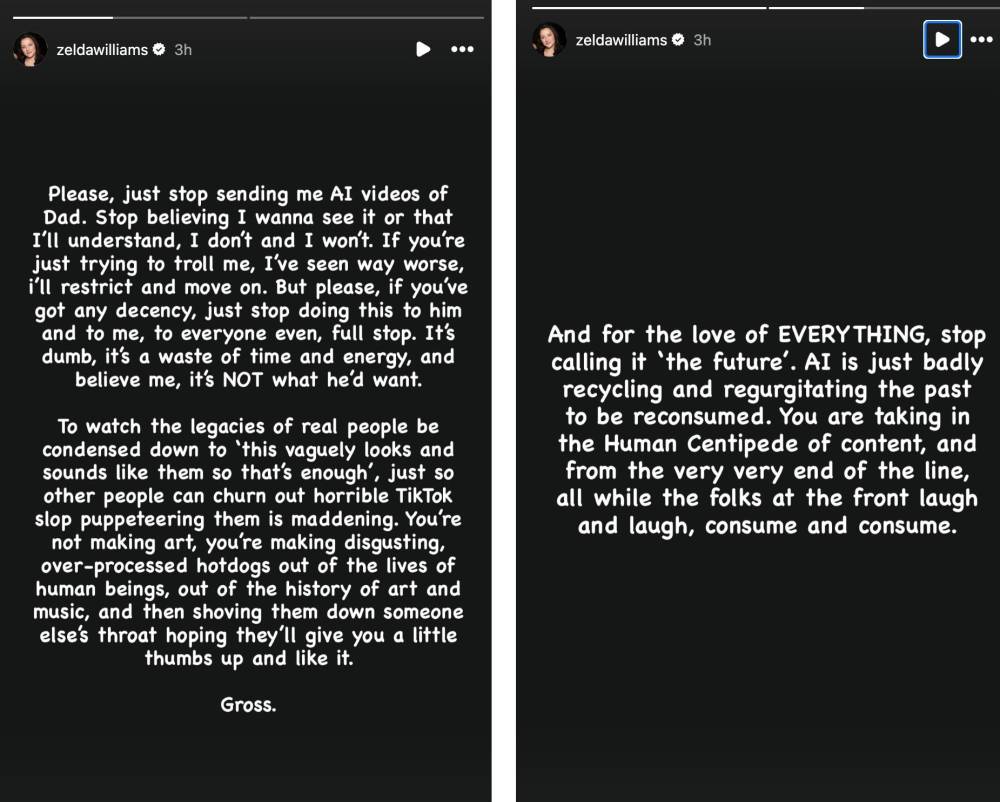
In a heartfelt Instagram story, Williams implored fans to cease creating and sharing AI-generated videos of her father. She expressed her discomfort and disapproval, stating, "If you’ve got any decency, just stop doing this to him and to me, to everyone even, full stop. It’s dumb, it’s a waste of time and energy, and believe me, it’s NOT what he’d want."


Sora’s Role in the Deepfake Debate
Williams’s statement comes shortly after the release of OpenAI’s Sora 2 video model and Sora social app. These tools empower users to generate highly realistic deepfakes, including those of deceased figures. While Sora implements safeguards to prevent the creation of deepfakes of living individuals without their consent, these restrictions do not extend to the deceased.
Ethical Gray Areas and Legal Loopholes
The legality of deepfaking the dead is murky. According to the Student Press Law Center, it is not illegal to libel the deceased. This legal loophole has led to a proliferation of AI-generated videos featuring historical figures and deceased celebrities on platforms like Sora. Examples include Martin Luther King Jr., Franklin Delano Roosevelt, Richard Nixon, Bob Ross, John Lennon, Alex Trebek, and Robin Williams.
OpenAI’s Stance and the Question of Liability
The criteria OpenAI uses to determine which deceased individuals can be deepfaked remains unclear. While Sora generated videos of Robin Williams, it reportedly blocked attempts to create content featuring former President Jimmy Carter and Michael Jackson. OpenAI did not respond to hustlerwords.com’s request for comment on the permissibility of deepfaking the dead. However, legal precedent suggests that the company is unlikely to be held liable for defamation of deceased individuals.
The Broader Implications of AI Deepfakes
Zelda Williams criticized the reduction of real people’s legacies to shallow imitations for entertainment purposes. She lamented the use of AI to "churn out horrible TikTok slop puppeteering them," calling it "maddening."
Copyright Concerns and the Future of AI Ethics
OpenAI has faced criticism for its handling of copyright issues. Initially, the company stated that Hollywood studios and agencies would need to explicitly opt out if they did not want their intellectual property included in Sora-generated videos. However, following pressure from the Motion Picture Association, OpenAI has reversed this position.
As AI technology advances, the ethical implications of deepfakes become increasingly pressing. The ability to realistically recreate the likeness of both living and deceased individuals raises concerns about consent, reputation, and the potential for misuse. The industry must grapple with these challenges to ensure that AI is used responsibly and ethically.



Leave a Comment