
Hustler Words – Contrary to widespread predictions that artificial intelligence would herald the demise of mobile applications, the App Store is experiencing an unprecedented resurgence, with new app launches soaring. A recent comprehensive analysis by market intelligence firm Appfigures reveals a dramatic uptick in global app releases, challenging the narrative of an AI-driven app decline and suggesting that AI may be a powerful catalyst for a new era of creation, as reported by hustlerwords.com.
The data paints a compelling picture: in the first quarter of 2026, worldwide app releases across both Apple’s App Store and Google Play witnessed a remarkable 60% year-over-year surge. Focusing solely on Apple’s iOS ecosystem, this percentage climbed even higher to an astonishing 80%. The momentum continued into April 2026, with total app releases across both platforms up a staggering 104% compared to the previous year, and an 89% increase specifically on iOS.
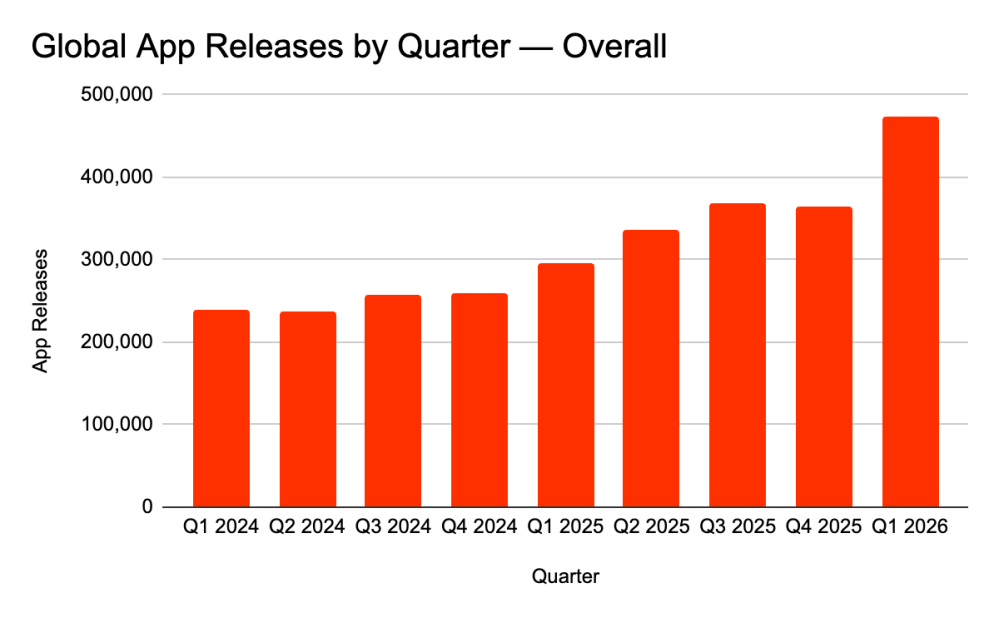
This surge directly contradicts prevailing industry anxieties. Apple’s Senior Vice President of Worldwide Marketing, Greg "Joz" Joswiak, recently quipped, echoing a sentiment that predictions of the App Store’s demise in the AI age were, perhaps, "greatly exaggerated." These findings emerge amidst a climate of concern, where figures like Nothing CEO Carl Pei have publicly mused about users shifting away from traditional apps towards AI chatbots and agents, even building a smartphone specifically for the AI era. Last year, The New York Times also highlighted the potential for novel computing platforms – from smart glasses to ambient computing devices and AI-enhanced smartwatches – to eclipse the smartphone’s dominance. Even OpenAI, in collaboration with famed Apple designer Jony Ive, is reportedly developing AI hardware.

Related Post
Yet, a compelling counter-narrative is gaining traction: AI itself could be democratizing app development. This paradigm shift suggests that AI tools are making it significantly easier for individuals, particularly those with innovative ideas but lacking deep technical coding expertise, to craft mobile software. This potential "new app gold rush" could empower a wave of creators, driving the App Store’s rebirth from an unexpected quarter.
Appfigures’ data further illuminates this trend by detailing shifts in popular app categories. While mobile games predictably retain their dominance, accounting for the majority of new releases globally in Q1 2026, other categories are making significant moves. "Productivity" apps have notably entered the top five, while "utilities" ascended to the second position. "Lifestyle" applications climbed from fifth to third, and "health and fitness" apps rounded out the top five, indicating a broad-based expansion beyond pure entertainment.
The working hypothesis among analysts is that sophisticated AI-powered development tools, such as Claude Code or Replit, are fueling this surge. It appears the industry has reached a crucial "tipping point" in AI usability, where these advanced tools are now accessible and intuitive enough for a wider audience to leverage them effectively. This newfound accessibility enables creators to develop their desired mobile applications with unprecedented speed, or even to build their very first apps, transforming abstract ideas into functional software.
However, this explosion of new applications presents a significant challenge for Apple’s App Store oversight. The sheer volume of submissions can strain review processes, occasionally leading to missteps. Recent examples include Apple’s delayed removal of the rewards app Freecash for rules violations, despite its prolonged presence in the Top Charts, and the more alarming incident involving a malicious cryptocurrency app, a clone of Ledger Live, which defrauded users of $9.5 million in crypto.
While such high-profile security breaches generate negative publicity, Apple continuously invests substantial resources into safeguarding its platform. The company’s 2024 analysis reported the removal or rejection of over 17,000 apps for "bait-and-switch" tactics, the rejection of more than 320,000 submissions for being spam, copying, or misleading, and proactive measures against over 37,000 potentially fraudulent apps. Despite these efforts, prominent Apple pundits, including John Gruber, have long advocated for a dedicated "bunco squad" – a specialized team focused on identifying and neutralizing scammy or fraudulent apps that gain traction or generate high revenue.
If the current surge in app releases is indeed attributable to AI-assisted "vibe coding" – a more intuitive, less technical approach to development – then the need for enhanced vigilance and sophisticated review mechanisms will only intensify. As the marketplace becomes increasingly saturated with new applications, ensuring the integrity and safety of the App Store will remain a paramount challenge for Apple, underscoring the complex implications of AI’s transformative power.




Leave a Comment