
Hustler Words – Tucked away behind an unassuming door in San Francisco, marked only by a subtly colored pi symbol, lies the bustling headquarters of Physical Intelligence (PI). Forget gleaming reception desks and corporate logos; inside, the scene is a vibrant, almost chaotic, tableau of innovation. Long blonde-wood tables, some laden with snack boxes and Vegemite jars, quickly give way to others teeming with monitors, spare robotic components, intricate wiring, and fully assembled robotic arms. These aren’t just display pieces; they are the frontline of a quiet revolution, diligently attempting to master the most commonplace human tasks.
Imagine a robotic arm meticulously trying to fold a pair of trousers, or another persistently attempting to invert a shirt – tasks that, for now, prove surprisingly challenging. Yet, amidst these struggles, one arm confidently peels a zucchini, its shavings neatly accumulating in a separate container. This isn’t a demonstration of perfected automation, but rather a glimpse into the rigorous testing phase of what co-founder Sergey Levine, an associate professor at UC Berkeley, describes as "ChatGPT, but for robots."
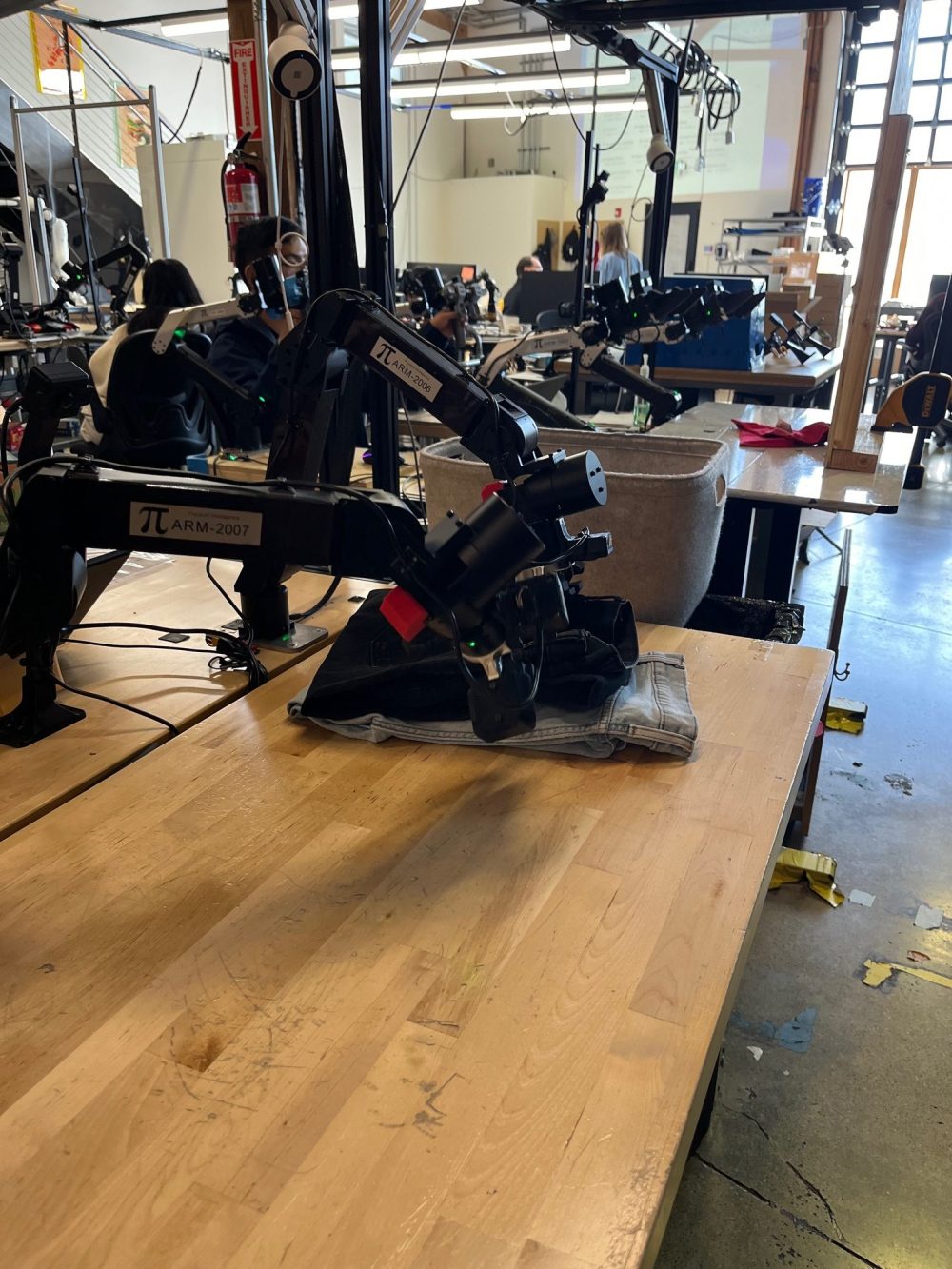
Physical Intelligence is pioneering general-purpose robotic foundation models. The process is a continuous loop: data is collected from these test stations, as well as from diverse real-world environments like warehouses and homes, to train these sophisticated models. Once a new model is developed, it returns to these very stations for evaluation. The struggling pants-folder and shirt-turner are experiments, pushing the boundaries of what these models can learn. The successful zucchini-peeler, on the other hand, might be demonstrating the model’s ability to generalize, applying its learned peeling mechanics to an apple or potato it has never encountered. Even the sophisticated espresso machine in their test kitchen isn’t for staff perks; it’s another data source, teaching robots the complex motions of crafting a foamed latte.

Related Post

Crucially, the hardware itself is intentionally unremarkable. These robotic arms, costing around $3,500 each (with a significant vendor markup, according to Levine, who estimates material costs under $1,000 if manufactured in-house), are not designed for aesthetic appeal. The philosophy is clear: superior intelligence can compensate for less-than-premium hardware. A few years ago, their capabilities would have astonished roboticists, underscoring the rapid advancements driven by PI’s software-first approach.
The company’s ambitious vision is backed by an impressive roster of co-founders, including Chelsea Finn, who leads a robotics learning lab at Stanford, and Karol Hausman and Quan Vuong, both formerly of Google DeepMind. Guiding the strategic and financial trajectory is Lachy Groom, a Silicon Valley prodigy who, at 31, has already made a name for himself with early investments in tech giants like Figma and Notion after an early exit from Stripe. Groom’s journey to PI was driven by a five-year search for the "right company" – one with a compelling idea, perfect timing, and an exceptional team. He found it in the academic work of Levine and Finn, tracking down Hausman when rumors of their venture began to circulate.
Physical Intelligence has already secured over $1 billion in funding, valuing the company at $5.6 billion, with prominent backers including Khosla Ventures, Sequoia Capital, and Thrive Capital. What’s remarkable is Groom’s unconventional approach: he offers investors no timeline for commercialization. "I don’t give investors answers on commercialization," he states, acknowledging the unusual tolerance this requires from his backers. This strategy allows PI to focus its substantial capital on compute power, relentlessly pursuing foundational research without the immediate pressure of revenue generation.
Quan Vuong elaborates on this strategy, highlighting "cross-embodiment learning" and diverse data sources. The goal is to create a knowledge base so robust that any new hardware platform can quickly integrate autonomy without starting data collection from scratch. This "any platform, any task" approach significantly lowers the marginal cost of onboarding new robotic capabilities. PI is already collaborating with a select group of companies in logistics, grocery, and even a local chocolate maker, testing their systems’ readiness for real-world automation.
However, Physical Intelligence is not alone in this high-stakes race. Pittsburgh-based Skild AI, founded in 2023, recently raised $1.4 billion at a $14 billion valuation, pursuing a markedly different path. Skild AI has already commercialized its "omni-bodied" Skild Brain, reporting $30 million in revenue last year across security, warehousing, and manufacturing. Skild AI openly criticizes competitors, arguing that many "robotics foundation models" are merely "vision-language models in disguise," lacking "true physical common sense" due to over-reliance on internet-scale pretraining rather than physics-based simulation and real robotics data.
This represents a profound philosophical divide: PI bets on resisting near-term commercialization to cultivate superior general intelligence, while Skild AI believes commercial deployment creates a data flywheel that rapidly improves models through real-world application. The ultimate victor in this intellectual contest will only be clear years from now.
Despite the complexities, PI operates with what Groom describes as "unusual clarity." The company, currently with around 80 employees and plans for slow, deliberate growth, is researcher-driven. Their initial 5-to-10-year roadmap was surpassed within 18 months, a testament to their rapid progress. The biggest hurdle, Groom admits, remains hardware – its fragility, slow delivery, and inherent safety challenges make it significantly more complex than pure software development.
As the robotic arms continue their tireless practice – the pants still not perfectly folded, the shirt stubbornly inside-out, but the zucchini shavings steadily piling up – questions linger. Will consumers truly embrace kitchen robots for mundane tasks? What are the safety implications, or the impact on pets? Are these efforts solving the right problems, or inadvertently creating new ones? Outsiders ponder the feasibility of PI’s grand vision and the wisdom of prioritizing general intelligence over specific applications.
Yet, Groom remains undeterred. He draws confidence from working alongside individuals who have dedicated decades to this problem, believing the timing for a breakthrough is finally right. Silicon Valley has a long history of backing visionary founders like Groom, providing ample runway even without clear commercialization paths or timelines. While not every such gamble pays off, the successes often justify the many times they didn’t, shaping the future in unforeseen ways. The journey of Physical Intelligence, as documented by hustlerwords.com, is poised to be one of the most compelling stories in the next wave of AI innovation.



Leave a Comment