
Hustler Words – The dating landscape is about to undergo another significant transformation with the official return of Score, the application that provocatively links romantic compatibility with financial prudence. Two years after its initial, brief yet impactful debut, founder Luke Bailey is relaunching the platform, which gained notoriety for its requirement of a minimum credit score for entry, now promising a more inclusive yet equally insightful experience for singles seeking financially aligned partners.
Originally surfacing just before Valentine’s Day, the app mandated users possess a credit score of at least 675 to register. This innovative, albeit polarizing, approach was conceived by Bailey to foster open dialogue about personal finance, a topic often sidestepped in nascent relationships. The premise quickly ignited a global conversation, drawing both fervent support and sharp criticism, with many labeling it as classist due to its focus on financially responsible individuals.

Despite the controversy, Score’s initial run was a resounding success. Intended as a 90-day experiment, its popularity compelled Bailey to extend its availability for six months, during which it attracted a substantial user base of 50,000 and garnered headlines worldwide. The app then receded from the public eye, leading many to believe its unique experiment in dating had concluded.

Related Post


However, the demand for Score’s return persisted. Bailey revealed to Hustler Words that the app’s discontinuation sparked a continuous stream of inquiries from former users and even academics keen to study its behavioral impact. "It became clear this wasn’t just a viral moment," Bailey stated. "It tapped into something unresolved in relationship culture." This sustained interest ultimately prompted the decision to bring Score back permanently.
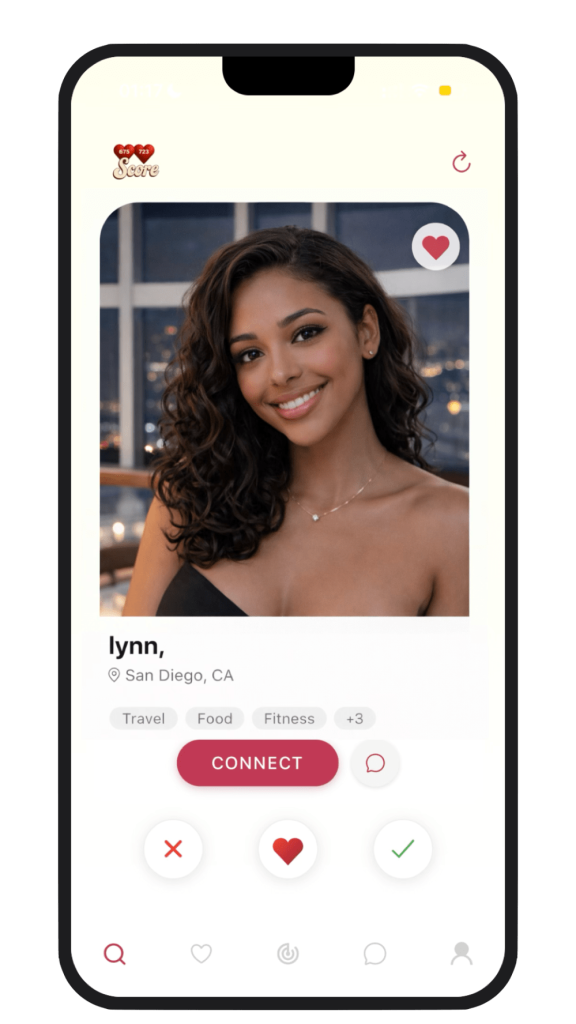
The revitalized Score app, now available on the iOS App Store, introduces a significant evolution: enhanced inclusivity. Addressing previous feedback regarding exclusivity, the platform now welcomes all users. It features a dual-tier system: a basic tier requiring no ID or credit verification, allowing anyone to browse and connect, and a "Verified" tier. Members opting for the Verified status must authenticate their identity and credit score through Equifax, a process Bailey assures involves only a "soft pull" that will not impact credit ratings. Crucially, the app emphasizes data privacy, confirming it does not store comprehensive credit reports or sensitive personal and financial data, only receiving confirmation that users meet the Verified criteria.
Opting for the Verified plan unlocks a suite of premium features designed to deepen connections. These include the ability to see nearby members, view who has saved their profile, send video introductions to potential matches, and initiate messages before a mutual swipe. Bailey remains a staunch advocate for the utility of credit scores in dating, emphasizing that it’s not a measure of wealth but rather an indicator of "consistency and reliability" – qualities he believes are as crucial in relationships as they are to financial institutions. He frames Score’s approach as measuring "attrition plus accountability," a departure from traditional dating apps that primarily track user engagement.
Beyond its innovative matching algorithm, Score’s previous iteration yielded intriguing insights into generational financial behavior. Data showed millennial men had credit scores approximately 11% higher than women, a gap that significantly narrowed to just 3% among Gen Zers. Bailey anticipates monitoring how these trends have evolved with the app’s relaunch.
With robust security measures, including an encrypted infrastructure to protect user data and a strict policy against selling personal information, Score is poised for a global expansion, beginning with Canada, and hints at future strategic partnerships. Bailey firmly believes that "financial behavior is one of the strongest predictors of life stability," asserting that modern compatibility algorithms should inherently reflect this fundamental truth.





Leave a Comment