
Hustler Words – A groundbreaking venture in Bengaluru, Alteon, has captured the attention and investment of prominent solo backer Lachy Groom, embarking on an audacious mission: to engineer an aircraft capable of remaining airborne for over a year by harnessing the relentless power of ocean winds. This ambitious undertaking, led by 20-year-old founder Samay Sanghvi, recently secured $2.5 million in a pre-seed funding round, spearheaded by Groom with additional participation from Together Fund. Sanghvi revealed to Hustler Words that Groom’s conviction was so immediate, he committed to the investment within the first half-hour of their initial meeting.
Alteon’s innovative approach draws inspiration from nature’s master aviators – albatrosses – employing a technique known as dynamic soaring. This method involves a small, fixed-wing autonomous aircraft repeatedly transitioning between layers of air moving at different velocities above the ocean’s surface, effectively extracting kinetic energy from wind shear. The ultimate goal is to transcend the inherent limitations of conventional aircraft, which are tethered by the finite capacity of their fuel tanks or onboard batteries.
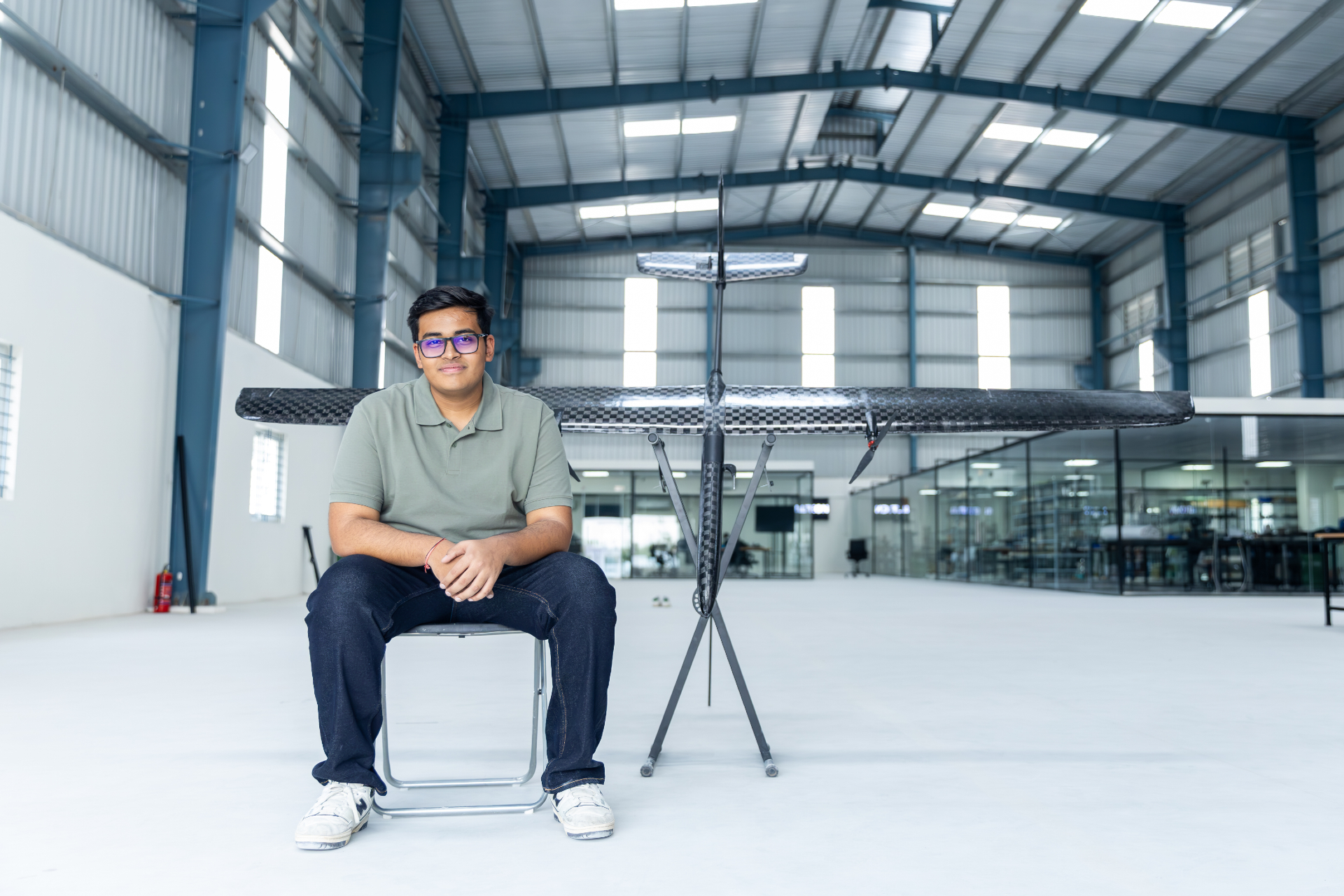
"Once you develop aircraft that can sustain flight for more than a year, the applications are virtually limitless," Sanghvi articulated to Hustler Words. Initially, Alteon envisions its long-endurance platforms revolutionizing maritime surveillance, offering governments an unprecedented, real-time vantage point over their territorial waters. The preliminary design features an aircraft with approximately a three-meter wingspan, designed to skim close to the ocean, ascend into faster air currents, execute a turn, and repeat the cycle to continuously accumulate energy. Over time, Alteon plans to integrate propellers that can function as turbines, converting captured wind energy into electricity to recharge the aircraft’s internal batteries.

Related Post
While the startup has yet to demonstrate sustained flight purely through dynamic soaring, a recent test over the Bay of Bengal marked a significant step forward. An autonomous prototype successfully completed seven O-shaped flight cycles at speeds exceeding 62 miles per hour, maintaining an astonishing proximity of less than one meter from the water’s surface. The next critical milestone, dubbed "energy-neutral dynamic soaring" by Sanghvi, aims for continuous flight with the propulsion system entirely disengaged, powered solely by the wind’s embrace.
Experts acknowledge the promise while highlighting the formidable challenges ahead. Dr. Gabriel Bousquet, a Silicon Valley-based aerospace and robotics engineer who extensively researched dynamic soaring at MIT, lauded Alteon’s low-altitude flight over water as a "promising first result." However, he underscored the greater hurdle of consistently extracting sufficient energy from real-world wind conditions to ensure prolonged flight. Dr. Bousquet noted to Hustler Words that operating at such low altitudes presents unique difficulties, including navigating turbulence, waves, sea spray, rain, and fluctuating light, all while continuously sensing and reacting to a dynamic ocean environment.
Dr. Bharath Swaminathan, whose PhD from IIT Madras focused on the stability of dynamic soaring, affirmed that the underlying physics is well-established and commended Alteon’s ambitious endeavor. He suggested to Hustler Words that even achieving several days of continuous flight via dynamic soaring would represent a monumental achievement. Yet, Swaminathan cautioned that while large-scale wind patterns are predictable, localized wind shear and turbulence can vary significantly, complicating the continuous energy harvesting process. Some of these complexities, he believes, will only become apparent through extensive real-world flight testing.
Lachy Groom, despite the inherent technical risks, remains steadfast in his conviction. "Ambitious problems invariably come with risks," Groom stated to Hustler Words. "For me, it ultimately came down to my belief that Samay and the Alteon team possess the ingenuity to overcome them."
Sanghvi’s journey to Alteon began immediately after high school in 2023, where he honed his aircraft building skills through a trial-and-error process involving numerous radio-controlled models. He formally established Alteon in 2025, securing early backing from Emergent Ventures and 1517. Today, Alteon operates with a dedicated team of 20 in Bengaluru, from a sprawling 10,000-square-foot facility. The startup is currently producing four to five aircraft per week for testing purposes, having conducted over 200 test flights in the past month alone, according to Sanghvi.



Leave a Comment