
Hustler Words – The burgeoning field of Voice AI has rapidly become a focal point for innovation, attracting billions in investment across diverse applications—from automating customer support and sales to powering intelligent meeting notetakers and enabling voice-first interactions in cutting-edge smart glasses. Yet, as AI labs rapidly deploy new models and hardware manufacturers strive to deliver seamless user experiences, a critical challenge emerges: how to rigorously test and refine these sophisticated technologies. Enter Treble, an Iceland-based startup that has just secured an additional $18 million in an extension of its Series A funding, bringing its total raised to over $40 million, positioning itself as the indispensable simulation backbone for the entire Voice AI industry.
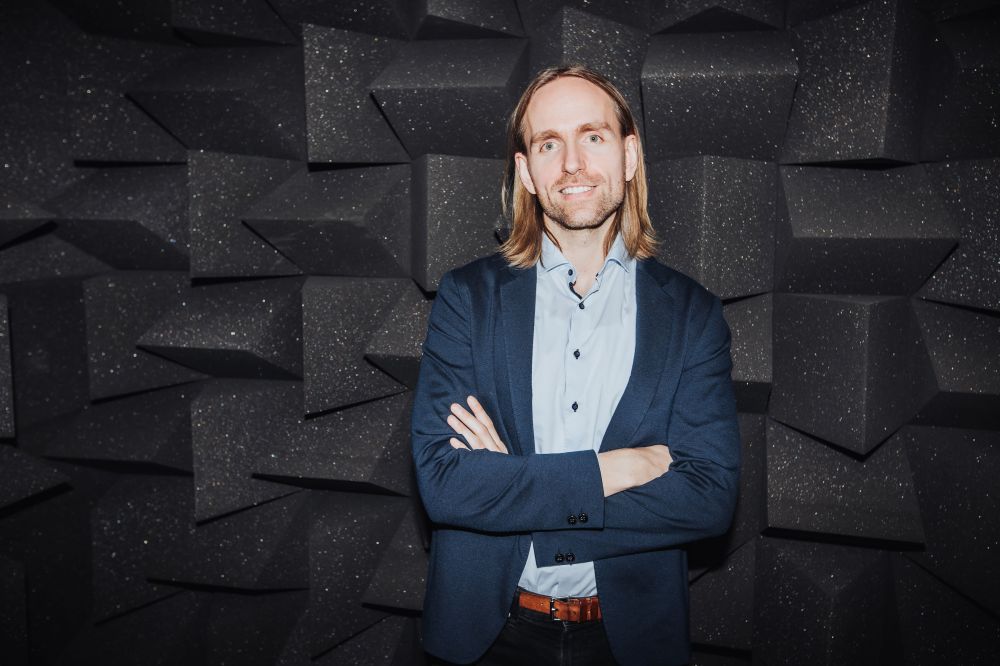
This latest funding round, spearheaded by Paladin Capital Group with continued support from existing investors KOMPAS VC, Frumtak Ventures, EIC, and Omega ehf, underscores the growing recognition of Treble’s pivotal role. Founded in 2020 by acoustic engineers Finnur Pind and Jesper Pedersen, Treble is building a comprehensive simulation platform designed to serve the critical needs of AI model developers, robotics firms, and consumer electronics manufacturers alike. The company already boasts industry giants like Amazon and Logitech among its clientele, a testament to its impactful solutions.
Treble’s offerings span several crucial verticals within simulation and data. For companies developing Voice AI, it provides a powerful synthetic data generation platform. This technology is instrumental for tasks such as speech enhancement, noise suppression, and the intensive training of AI models. Beyond data generation, Treble also specializes in evaluating Voice AI models under a myriad of realistic conditions, offering invaluable feedback to development labs. Earlier this year, the company notably partnered with Hugging Face to launch a benchmark specifically for speech recognition models, designed to assess performance across diverse, real-world acoustic scenarios.


"Audio AI fundamentally presents a data challenge, and it is precisely here that the most significant opportunities lie for enabling the next generation of models and hardware," Treble co-founder Finnur Pind shared with hustlerwords.com. "Historically, nearly all sound-related AI has relied on recordings and data scraped from the internet. We firmly believe that accurate physics simulation offers a transformative alternative for creating the high-quality data essential for sound-based AI."
Beyond software, Treble also plays a crucial role in hardware design and testing from an acoustic perspective. The company collaborates with headphone and speaker manufacturers, offering virtual prototyping services that allow them to predict and optimize how their products will sound before physical production. Furthermore, Treble can simulate how effectively a smart speaker will interpret commands based on its placement within an environment. More recently, the company has expanded its expertise into providing simulation testing for emerging smart glasses and other advanced AI-powered devices.
Pind expressed particular enthusiasm for the potential of wearables to enhance human hearing. "I’m incredibly excited about the next generation of devices like headphones and smart glasses that could enable features akin to superhuman hearing," he stated. "This is an area where users could genuinely hear better in challenging acoustic environments—imagine being in a bustling restaurant and only wanting to hear conversations within a two-meter radius, or in a seminar, being able to mute ambient distractions."
Looking ahead, Treble aims to deepen its engagement in the physical AI space. This includes extending its simulation and testing capabilities to robotics, automotive, and drone companies, enabling them to integrate sophisticated sound-based functions into their products and operations.
Francois Ruether, VP of Paladin Capital Group, emphasized to hustlerwords.com the unique value proposition of Treble’s platform, which adeptly simulates various models and devices. "Our core thesis is that as an increasing number of products become reliant on understanding sound, this underlying infrastructure will become exponentially more valuable across Voice AI, wearables, robotics, and physical AI," Ruether explained. "Customers maintain full ownership of their models, products, and development workflows, while simultaneously benefiting from a shared, simulation-native acoustic infrastructure layer."
With its innovative approach to acoustic simulation and a substantial new injection of capital, Treble is strategically positioned to become an indispensable partner in the ongoing evolution of intelligent devices, shaping how AI hears and interacts with the world.




Leave a Comment