
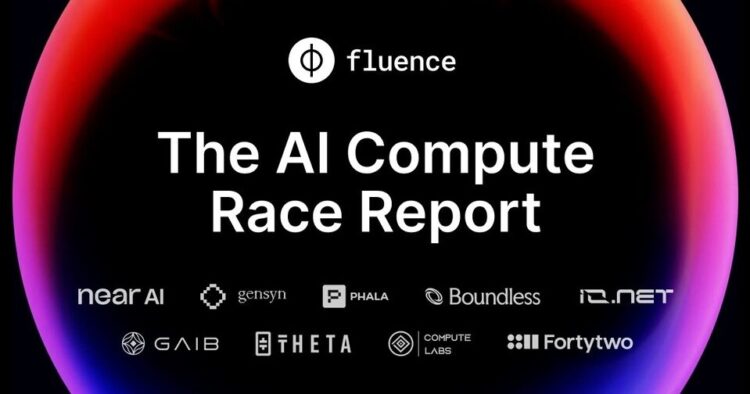
<strong>Hustler Words – </strong>A provocative new industry analysis has pulled back the curtain on the skyrocketing costs of artificial intelligence, revealing a massive pricing disparity in the GPU market. According to "The AI Compute Race" report released by Fluence, major hyperscalers are charging nearly double the median market rate for essential GPU compute power compared to specialized cloud providers. The data suggests that while the world races to build larger models, the cost of the silicon required to run them is becoming a significant barrier to entry for everyone except the industry’s largest players.
The research, conducted in collaboration with several prominent industry partners including NEAR AI and io.net, highlights a stark reality: where you source your compute determines your survival. For high-demand chips like the H100, H200, and the cutting-edge B200, hyperscalers are listing prices at a staggering 1.98 times the median GPU-cloud rate. In some instances, H100 models are being marked up by as much as 2.8 times the market average. For example, an H200 can fluctuate wildly from $4.08 to as high as $10.60 per hour depending on the provider.
The report also delivers a reality check for CFOs expecting a deflationary trend in AI hardware. Contrary to the belief that supply will eventually drive prices down, seventeen of the twenty-two GPU models tracked showed price increases over the last year. Specifically, median H100 rental rates have surged by 13% to 30% within recent measurement windows.



"Any company with GPUs can now serve a near-frontier model on hardware it controls. The GPUs are the hard part," noted Evgeny Ponomarev, Co-founder of Fluence. This scarcity is driven by the rapid rise of open-weight models, which are closing the performance gap with closed-source giants, thereby driving a massive, sustained demand for raw compute power.
For enterprises looking to optimize their AI budgets, the report offers a strategic roadmap. The findings suggest that commitment length is a primary lever for cost reduction; while a one-year reservation can slash median prices by 21%, a three-year commitment can reduce costs by a massive 48%. Additionally, for non-critical, interruptible workloads, utilizing "spot capacity" can offer savings of up to 47% compared to standard on-demand rates.
To stay competitive, the report advises companies to look beyond the traditional hyperscaler giants and explore "neocloud" providers, match specific GPU generations to the specific needs of their models, and prioritize long-term reservations for steady workloads.






Leave a Comment