
Hustler Words – The relentless march of artificial intelligence is sparking an unprecedented demand for data centers, creating a collision course with communities across the United States. While proponents tout economic revitalization and job creation, a growing chorus of residents, particularly those in areas historically burdened by heavy industry, are voicing vehement opposition, citing profound environmental and energy concerns. This burgeoning conflict highlights a critical societal debate: at what cost should technological advancement proceed, especially when it impacts the health and well-being of local populations?
For individuals like Shawmar Pitts, an activist and lifelong resident of Philadelphia’s Grays Ferry neighborhood, these anxieties are far from abstract. Pitts’ upbringing was shadowed by the East Coast’s largest oil refinery, which ceased operations following a devastating explosion in 2019. Witnessing chronic health issues plague his family and friends, the true cause remained elusive until 2018, when he encountered Philly Thrive, an environmental justice group. Their literature on the refinery’s health impacts resonated deeply. "I’m looking at all the sicknesses on this paper, and I’m like, ‘My mother has this, my sister has that, my next-door neighbor suffers from this’ – every house, someone has something on that list," Pitts recounted to Hustler Words. This revelation ignited his commitment to environmental advocacy.
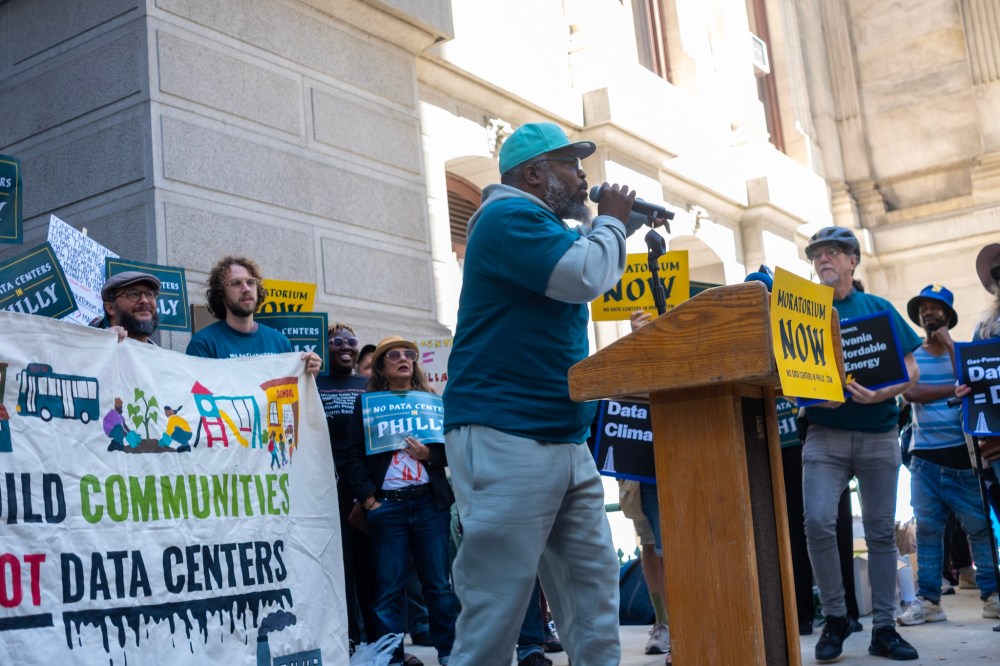
Now serving as managing co-director of Philly Thrive, Pitts is at the forefront of a movement advocating for a data center moratorium in Philadelphia. Despite the absence of formal construction proposals, two potential sites have been identified: one in Northeast Philadelphia and another in Pitts’ own Grays Ferry community, a neighborhood already scarred by industrial legacy.

Related Post

Philadelphia’s resistance is not an isolated incident. Across the nation, communities are pushing back against the proliferation of new data centers, particularly in areas grappling with finite resources. The intensity of this opposition is notably amplified in regions where the indelible mark of past industrial giants still casts a long shadow.
At a recent rally outside Philadelphia’s City Hall, Sonya Sanders, Philly Thrive board president, articulated the community’s stance unequivocally: "We don’t want data centers. We don’t want the pollution, we don’t want the noise, and we know they’re not going to bring us more jobs." Sanders, whose husband died of a rare bone cancer in 2020, firmly believes his illness was a direct consequence of refinery emissions. "In my eyes, they killed him," she asserted at the rally, attributing his death to "the pursuit of profit."
While a modern data center might not replicate the colossal environmental footprint of the defunct Philadelphia Energy Solutions refinery, which processed 335,000 barrels of crude oil daily, the global race for AI dominance presents its own staggering challenges. BloombergNEF projects that by 2035, U.S. data centers will consume more natural gas than Germany and Japan combined – a nearly twofold increase from projections made just nine months prior.
Although natural gas is often lauded as a cleaner alternative to other fossil fuels, its environmental impact is far from negligible. Each cubic foot of natural gas combustion releases the equivalent of 60 grams of carbon dioxide. The anticipated surge in data center demand is expected to generate an additional 1 million metric tons of greenhouse gas pollution daily, contributing approximately 12% of current U.S. greenhouse gas emissions. A 2021 Harvard University study starkly revealed that fossil fuel air pollution is responsible for one in five deaths globally, a grim statistic poised to escalate in the AI era.
Annie Fox, an attorney with the Clean Air Council, highlighted further concerns at the rally: "A typical data center planned in Pennsylvania has hundreds of diesel engines that spew air pollution, and even if they’re supposedly reserved for emergencies, the government has already said that the data center should use those rather than drawing from an overstressed electrical grid during some heat waves." She warned of a vicious cycle: "Fossil fuel-hungry data centers will worsen climate change, making those heatwaves more frequent and severe."
The growing public outcry appears to be influencing policymakers. In New York, Governor Kathy Hochul signed an executive order temporarily halting the approval of new permits for large projects. "Progress shouldn’t arrive with a higher utility bill, deleted water supply, or noise pollution," Hochul stated, emphasizing that "These data centers can only be built, should only be built in places that want them." Similar data center moratoriums have been enacted in cities nationwide, including Denver, Indianapolis, Asheville, Charlotte, and Reno, often to facilitate comprehensive impact assessments.
Donna Greenberg, a Philadelphia resident attending the rally, articulated a broader spectrum of worries to Hustler Words: "I’m worried about pollution. I’m worried about surveillance and the fact that they’re going to have access to information they have no business knowing, and I’m concerned that they’re going to be using water and electricity that takes away from the people and the neighborhoods who need it."
The "No Data Centers in Philly" campaign kicked off with over 100 passionate attendees, their chants echoing through City Hall in a powerful display of community solidarity. "I just think that our community standing up and fighting back is tremendous," Pitts remarked, underscoring the collective effort required to challenge the rapid expansion of AI infrastructure.


Leave a Comment