
Hustler Words – The annual Roblox Developer Conference (RDC) recently concluded, unveiling a suite of transformative updates poised to redefine game creation and distribution on the popular platform. These announcements signal a strategic pivot for Roblox, moving beyond merely attracting users to its own ecosystem, towards empowering creators to build more easily and extend the reach of their creations far beyond the platform’s traditional confines.
At the forefront of these innovations is a significant expansion of Roblox’s generative AI game creation tools. First introduced in July, the "Build" feature, which allows users to craft games using natural language prompts, is now rolling out to Serbia and Singapore, following its initial launch in New Zealand. This powerful AI-driven capability is also gaining desktop access for larger-screen development, alongside a new asset library and enhanced iterative control. Later this year, creators can anticipate a prompt-based scene-generation feature, further integrating AI into the Roblox Studio workflow. This move dramatically lowers the barrier to entry, democratizing game development for a broader audience.
Perhaps the most significant strategic shift is Roblox’s commitment to enabling games to exist independently. Soon, developers will have the unprecedented ability to publish their Roblox-powered creations as standalone applications on mobile, PC, and console platforms. Furthermore, by year-end, players will be able to join any game directly through a web browser link, eliminating the need to first launch the Roblox application. This expansion transforms Roblox from a destination into a robust game engine, allowing its vibrant developer community to tap into wider audiences and new distribution channels.

Related Post

Beyond creation and distribution, Roblox is also enhancing the player and creator experience with several new functionalities. Non-player characters (NPCs) are set to become more sophisticated, with capabilities including automated playtesting later this year. Creators will also be able to implement an offline mode, ensuring uninterrupted gameplay even in areas with poor network connectivity. For players, a new Friends chat tab will offer persistent communication across games, complete with voice typing support. The platform’s discovery algorithm is also being refined to better match content with user demographics, suggesting shorter-format games for younger users and longer experiences for older audiences.
In a nod to diverse creative visions, Roblox is introducing tools for 2D game development, featuring an orthographic camera, animated image containers, and direct sprite-sheet import for animation. The "Moments" vertical feed will also evolve, allowing players to tap on any avatar within a clip to purchase associated items, streamlining in-game commerce.
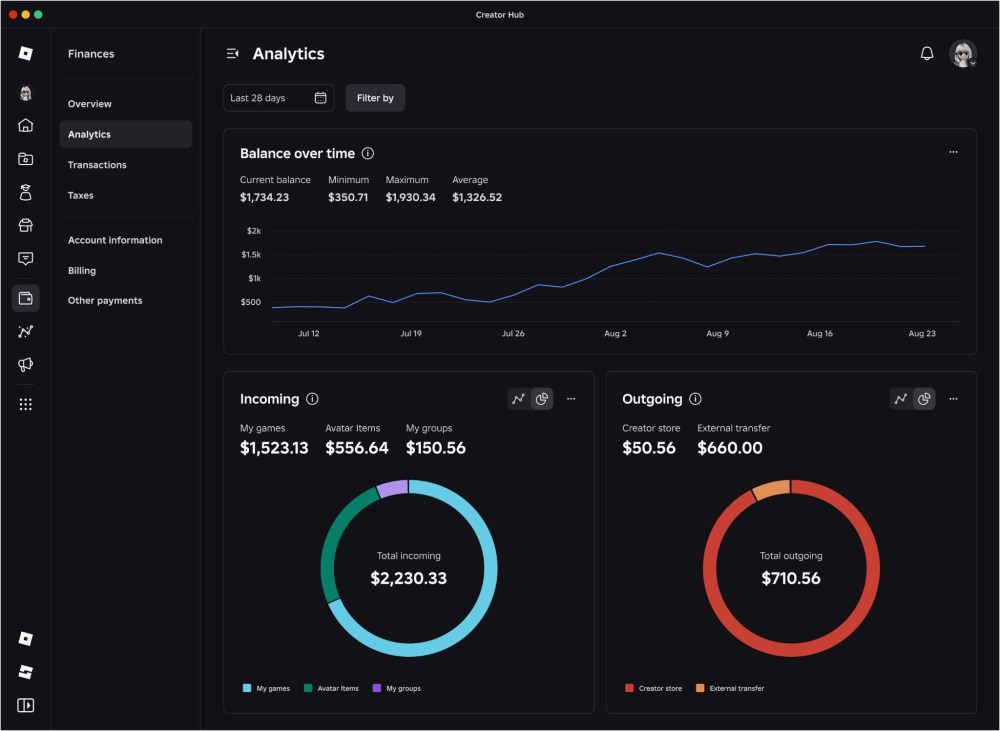
Recognizing the substantial financial success of its creators—who have collectively earned over $5 billion since 2013, with $1.7 billion in the last 12 months alone—Roblox is launching new financial products to better manage these earnings. The Roblox Wallet, rolling out soon, will enable creators to receive real-money payouts by the end of each business day and transfer funds to external bank accounts. This service, initially partnering with Airwallex for U.S. users aged 18 and older, plans for future global expansion. Looking ahead to next year, a Roblox Card is also teased, offering creators a convenient way to spend their earnings at participating establishments.
These comprehensive updates underscore Roblox’s ambition to foster a more open, accessible, and financially rewarding ecosystem for its global community. As founder and CEO David Baszucki noted, players cumulatively spent over 29 billion hours on the platform across 180 countries last quarter. By empowering creators with advanced AI tools, broader distribution, and robust monetization options, Roblox is not just building games; it’s building the future of interactive entertainment, both within and beyond its own walls.



Leave a Comment