
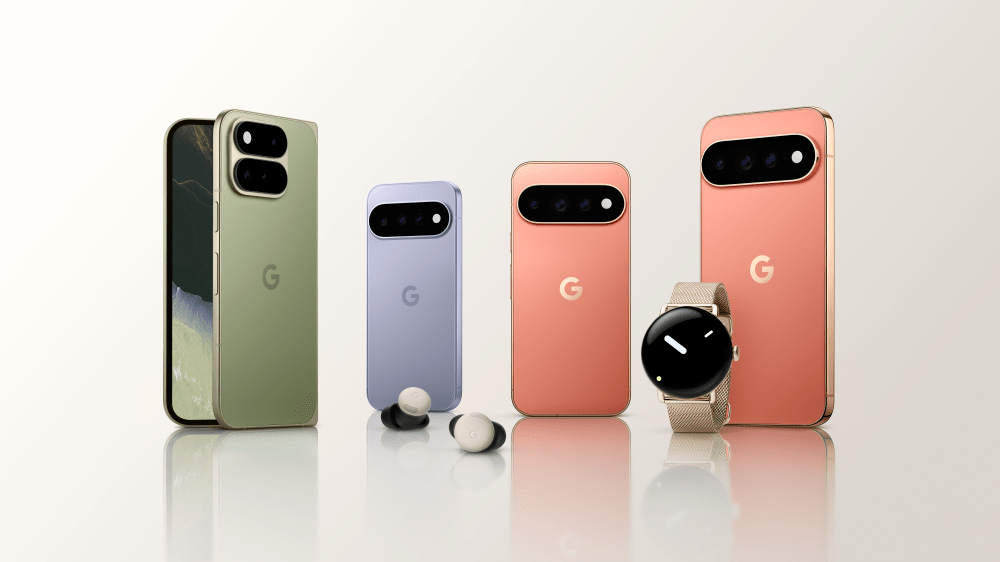
Hustler Words – Google’s latest flagship smartphone series, the Pixel 11, has officially arrived, signaling a strategic shift where groundbreaking artificial intelligence takes precedence over radical hardware redesigns. While the external aesthetics and internal architecture largely echo its predecessor, the true innovation lies beneath the surface, powered by an expansive integration of Google’s advanced Gemini AI. This year’s lineup is less about physical transformation and more about intelligent evolution, promising users an unprecedented level of agentic AI capabilities.
At the core of the Pixel 11’s advancements is a suite of enhanced Gemini features designed to streamline daily tasks with remarkable efficiency. Users in the U.S. will now experience a truly "agentic" AI, capable of executing complex requests such as ordering groceries, booking ride-shares, or securing coffee. Furthermore, Gemini can autonomously manage table reservations or appointment scheduling by calling businesses on the user’s behalf. Google emphasizes user control, allowing intervention or termination of tasks at any point, with full transcripts available for review of all AI-operated calls.
The popular "Magic Cue" feature has also received a significant upgrade, leveraging Gemini to proactively present contextually relevant information. This now extends to pulling data from various applications on the device, offering intelligent suggestions for activities like dining out or attending a show, without explicit prompting. Complementing this, Google’s previously announced dictation product, Rambler – poised to challenge rivals like Wispr Flow and Aqua – is now integrated into the new Pixel phones, offering advanced transcription capabilities.

Related Post
Beyond core task automation, the Pixel 11 introduces several user-centric innovations. A standout feature is the device’s ability to translate videos, podcasts, and voice messages in real-time, bridging communication gaps effortlessly. The intuitive "Circle to Search" gesture-based function, a fan favorite, now extends directly into the camera interface, mirroring similar innovations seen in competing mobile operating systems. In a significant stride for accessibility, Gemini within the camera can translate sign language into text, fostering better communication for individuals with hearing impairments, alongside a redesigned live transcribe interface for improved clarity.
Intelligent Imaging Redefined
The camera system, a traditional Pixel strong suit, receives a substantial AI infusion. "Magic Capture" is a prime example, intelligently sifting through hundreds of frames captured during a video recording to identify and present the optimal still images. This feature not only auto-crops but also unblurs these selected frames, preparing them instantly for sharing. For photography enthusiasts, the super zoom capabilities have been dramatically enhanced, reaching 120x on Pro models (up from 100x) and 30x on the base Pixel 11 (up from 20x). Users can also personalize their photographic style with custom camera "looks," essentially specialized filters that apply during image capture.
Pro-grade Pixel 11 devices benefit from "Instant Night Sight," a feature that accelerates low-light photography by 4.5 times compared to the previous generation. Video recording also sees a boost, with support for 8K resolution, enhanced video boost technology, and superior stability. Creators will appreciate the new "creator suite" mode within video settings, transforming the Pixel 11 into a teleprompter for seamless content production, with all clips conveniently saved in a dedicated folder for easy access and editing.
Under the Hood: Tensor G6 and Subtle Hardware Refinements
Powering these sophisticated AI capabilities is Google’s latest Tensor G6 processor. This new silicon promises a 20% improvement in power efficiency and a 25% faster browsing experience, according to Google, while also enabling the rapid processing required for features like Instant Night Sight. The Tensor G6’s advanced image signal processing (ISP) is crucial for delivering the impressive 120x magic zoom on the Pixel 11 Pro XL, ensuring lower latency for complex AI models, though specific metrics remain undisclosed.
While display sizes remain consistent across the lineup, the Pro models feature a noticeably brighter screen, enhancing visibility in diverse lighting conditions. Google also confirmed an updated main camera sensor for the Pro models, promising higher-quality photos, and a new telephoto sensor that captures 32% more light, though specific megapixel counts were not provided.
In a subtle yet distinctive design choice, Google has incorporated an LED light on the back of all Pixel 11 devices, integrated around the flashlight. This LED serves as a discreet indicator for incoming calls or messages from favorite contacts, and also provides visual feedback when Gemini is actively processing or listening.
Pricing and Availability
The Pixel 11 series is available for pre-order starting today, with all models featuring a generous base storage of 256GB. The Pixel 11 begins at $899, the 11 Pro at $1,099, and the 11 Pro XL at $1,299. While the Pixel 11 and 11 Pro maintain the same price point as last year’s 256GB models, the top-tier Pixel 11 Pro XL sees a $100 increase, reflecting rising component costs. A new range of Pixel 11 accessories, including clear Pixelsnap cases and new Pixelsnap Ring Stand colors, also launches alongside the phones.




Leave a Comment