
Hustler Words – The escalating demand for artificial intelligence is revealing a critical bottleneck in the very infrastructure that powers it: energy. As AI data centers push the boundaries of computational capability, the primary constraint is shifting from raw processing power to the efficient delivery of electricity. This pivotal shift has catalyzed Peak XV Partners’ strategic investment in C2i Semiconductors, an innovative Indian startup developing integrated, system-level power solutions designed to dramatically reduce energy losses and enhance the economic viability of vast AI deployments.
C2i, an acronym for control conversion and intelligence, has successfully closed a $15 million Series A funding round. This round was spearheaded by Peak XV Partners, with notable participation from Yali Deeptech and TDK Ventures. This latest capital infusion brings the two-year-old company’s total funding to an impressive $19 million.
This significant investment arrives amidst a global acceleration in data center energy consumption. Projections from a December 2025 BloombergNEF report indicate a near-tripling of electricity consumption from data centers by 2035. Concurrently, Goldman Sachs Research estimates a staggering 175% increase in data center power demand by 2030 compared to 2023 levels – a surge equivalent to powering one of the world’s ten largest electricity-consuming nations.

Related Post
A substantial portion of this energy strain originates not from the generation of electricity itself, but from the inefficiencies inherent in its conversion within data centers. High-voltage power must be stepped down thousands of times before it can reach the sensitive Graphics Processing Units (GPUs). This intricate process currently results in an estimated 15% to 20% energy dissipation, as articulated by C2i’s co-founder and CTO, Preetam Tadeparthy, in an interview with Hustler Words. Tadeparthy also noted the trend of increasing input voltages, stating, "What used to be 400 volts has already moved to 800 volts, and will likely go higher."
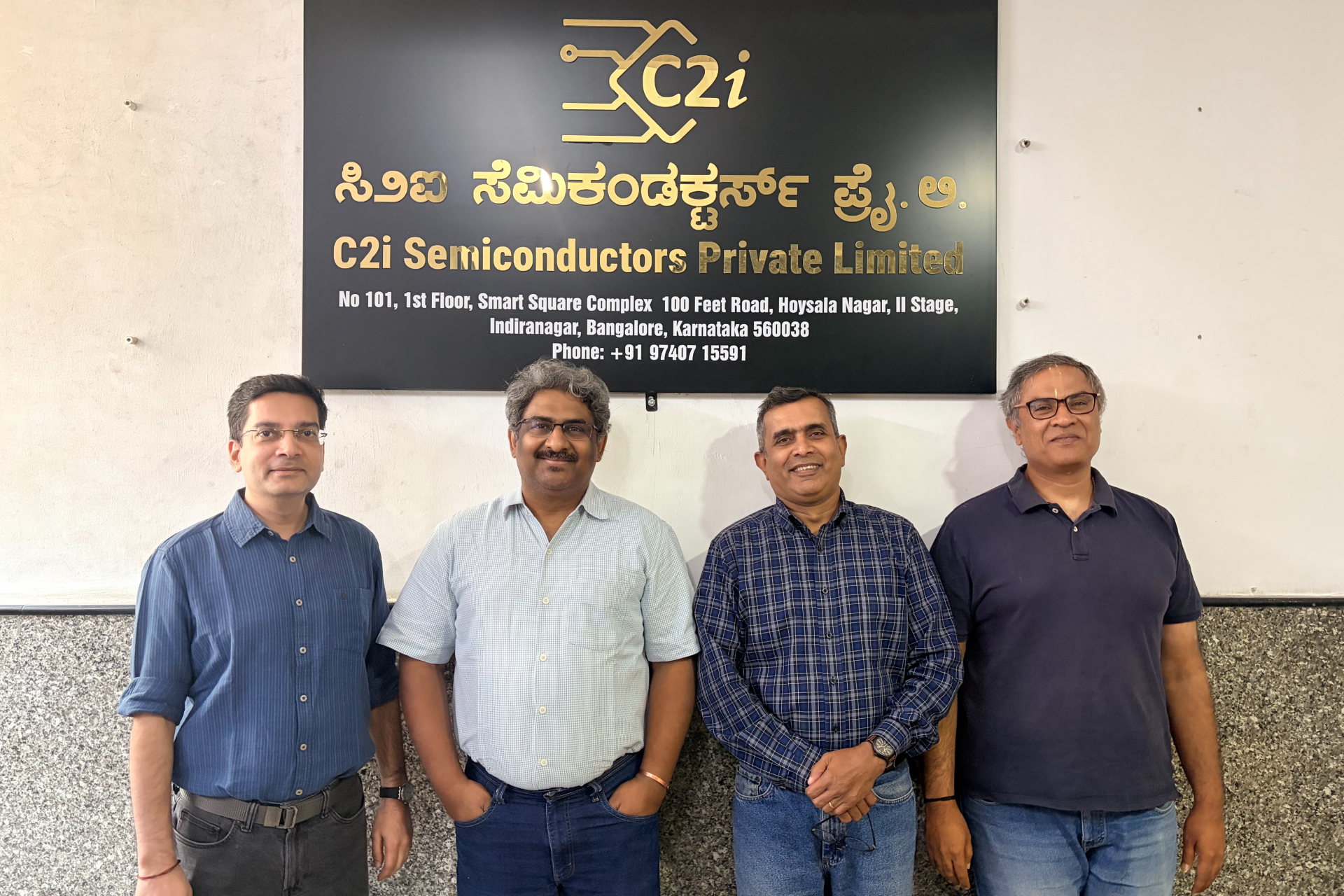
Established in 2024 by a team of former Texas Instruments power executives—Ram Anant, Vikram Gakhar, Preetam Tadeparthy, and Dattatreya Suryanarayana, alongside Harsha S. B and Muthusubramanian N. V—C2i is pioneering a holistic, plug-and-play "grid-to-GPU" power delivery system. This innovative architecture spans from the data center bus all the way to the processor itself.
By treating power conversion, control, and packaging as an integrated platform, C2i projects it can slash end-to-end energy losses by approximately 10%. This translates to roughly 100 kilowatts saved for every megawatt consumed, yielding cascading benefits across cooling expenditures, GPU utilization rates, and the overall financial performance of data centers. "All that translates directly to total cost of ownership, revenue, and profitability," Tadeparthy emphasized.
For Peak XV Partners, which emerged from Sequoia Capital in 2023, the appeal of C2i lies in its potential to fundamentally reshape the economics of large-scale AI infrastructure. Rajan Anandan, managing director at the venture firm, conveyed to Hustler Words that after the initial capital outlay for servers and facilities, energy expenditure quickly eclipses initial capital outlays as the primary operational cost. Consequently, even marginal improvements in efficiency yield substantial value. "If you can reduce energy costs by, call it, 10 to 30%, that’s like a huge number," Anandan remarked, adding, "You’re talking about tens of billions of dollars."
These assertions are poised for rapid validation. C2i anticipates its first two silicon designs to emerge from the fabrication process between April and June. Following this, the startup plans to authenticate their performance metrics with data center operators and hyperscalers who have expressed interest in reviewing the data, according to Tadeparthy.
The Bengaluru-based startup has assembled a team of approximately 65 engineers and is actively establishing customer-facing operations in the U.S. and Taiwan in preparation for early deployments.
Power delivery represents a deeply ingrained segment of the data center infrastructure, historically controlled by well-established industry behemoths with substantial resources and lengthy qualification cycles. While many newer companies focus on optimizing individual components, C2i’s strategy of redesigning end-to-end power delivery necessitates the simultaneous coordination of silicon, packaging, and system architecture. This capital-intensive approach is rarely attempted by startups and can require years to prove in production environments.
Anandan acknowledged that the critical factor now is execution, noting that all startups face inherent technology, market, and team risks when making strategic wagers on industry evolution. In C2i’s specific case, he believes the feedback cycle is anticipated to be relatively swift. "We’ll know in the next six months," Anandan stated, pointing to the upcoming silicon validation and early customer feedback as the moments when the company’s core thesis will be rigorously tested.
This investment also underscores the significant maturation of India’s semiconductor design ecosystem in recent years. "The way you should look at semiconductors in India is, this is like 2008 e-commerce," Anandan posited, suggesting a nascent but rapidly expanding sector. He highlighted a burgeoning pool of engineering prowess, with an increasing share of global chip designers based in the country, complemented by state-supported design-linked incentive programs that have lowered the cost and risk associated with tape-outs. This environment makes it increasingly viable for startups to develop globally competitive semiconductor products from India, rather than merely operating as captive design centers.
Whether these favorable conditions translate into a globally competitive product will become clearer over the coming months, as C2i embarks on validating its system-level power solutions with its initial customers.




Leave a Comment