
Hustler Words – Snap, the parent company of Snapchat, is embarking on a renewed effort to justify the existence and premium price tag of its augmented reality smart glasses, Specs. Following a notably challenging initial unveiling earlier this year, which saw the $2,200 device widely criticized for its design and cost, the company is now making a concerted push to articulate a more compelling vision for its advanced hardware.
The initial debut of Specs was met with considerable public skepticism, bordering on outright derision. The glasses, vaguely reminiscent of specialized eyewear and carrying a substantial price, sparked online jeers and even calls for CEO Evan Spiegel’s resignation, leading to a significant dip in Snap’s market valuation. This left the company in a precarious position, needing to clearly define the utility of a heavy, expensive piece of hardware that most casual consumers would likely find out of reach.
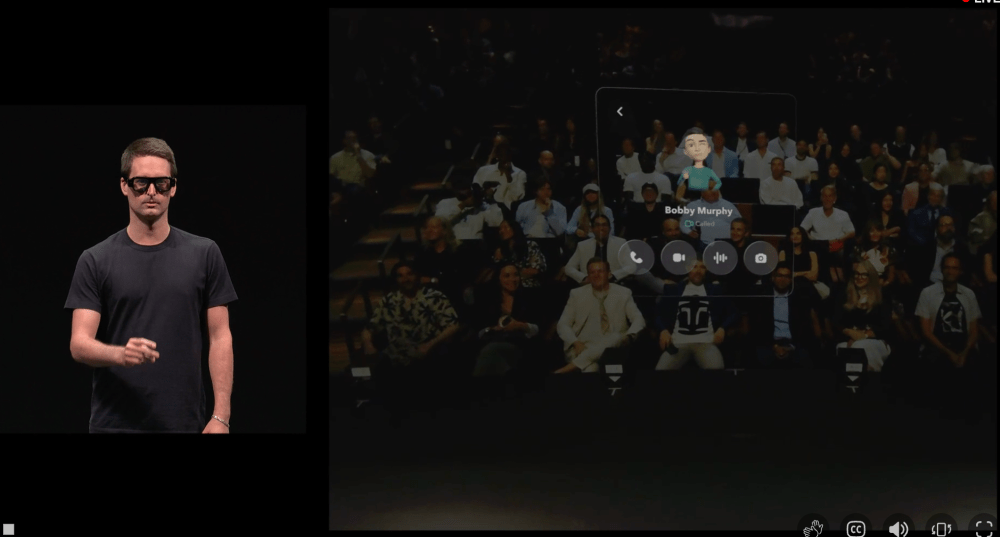
This week, at a high-profile event in Los Angeles, Spiegel and other Snap executives seized the opportunity to present a revitalized strategy. They unveiled a suite of new functionalities and services meticulously crafted to integrate Specs into a broader tapestry of digital engagement, thereby imbuing the device with a more distinct sense of utility and purpose.



Among the announcements were expanded entertainment integrations, allowing Specs to connect seamlessly with popular streaming platforms like HBO Max and Spotify. This move aims to address a previous deficit in interactive leisure options, providing users with a foundational layer of engaging content directly through their wearable.
Perhaps the most pivotal revelation was Specs Intelligence, an innovative "anticipatory AI" system. Described by Spiegel as an "AI native operating system," this intelligence is engineered to comprehend a user’s goals, priorities, relationships, and routines by integrating with connected applications and tools. Its stated aim is to enhance focus on immediate tasks while simultaneously advancing long-term objectives. While designed to complement the AR glasses, the system’s broader utility suggests it can function effectively as a sophisticated AI productivity application across various user devices, including iPhones and Macs, without strictly requiring the Specs hardware. It’s envisioned to "connect the dots" across Snap’s augmented reality Lenses, both on phones and Specs, streamlining user workflows.
Shifting focus to professional applications, Snap also introduced Specs for Enterprise, a strategic initiative to embed the device within corporate environments. The company announced key partnerships with industry giants such as Amazon, Salesforce, and Nvidia, signaling an intent to position Specs as a valuable tool for business operations. A demonstration video highlighted its potential utility for IT technicians, showcasing an instance of hardware repair facilitated by the AR glasses. Spiegel emphasized the development of robust mobile device management, security controls, and deployment solutions, aiming to provide "peace of mind to IT departments."
Some additional features presented raised eyebrows, such as an AR application developed in collaboration with the NBA and WNBA, designed to help users improve their basketball shot. The practicality of engaging in active sports while wearing the bulky device remains a subject of debate. For users seeking untethered connectivity, Snap unveiled an optional package featuring a charging case with integrated cellular capabilities, available through a partnership with Verizon for a monthly fee of $10 for Verizon subscribers and $20 for others.
Spiegel articulated a philosophical underpinning for Specs, framing it as a "human-centric" approach to computing. Acknowledging the current "weird" landscape of technology, he explicitly rejected dystopian visions of AI displacing human labor or virtual realities supplanting physical existence. "Making people irrelevant is not progress," Spiegel asserted, advocating for technology that empowers individuals. This perspective underpins Snap’s consistent justification for the device’s steep price tag, positioning Specs not merely as smart glasses, but as a wearable computer designed to augment human capability.
With a pop-up experience slated for Los Angeles in October ahead of a broader fall shipment, the ultimate test for Specs will be consumer adoption. Whether Snap’s renewed narrative and expanded functionalities can convince a skeptical market to embrace a $2,200 wearable computer remains a critical question for the company’s future in hardware.



Leave a Comment