
Hustler Words – For generations, humanity has pursued the monumental ambition of replicating the immense power of stars here on Earth to generate electricity. This grand vision, often relegated to the realm of science fiction and perpetually "a decade away," is now closer to becoming a reality than ever before. A burgeoning ecosystem of innovative startups is aggressively advancing the development of fusion reactors, aiming to integrate this transformative energy source into our global power grids.
The allure of limitless, clean energy has attracted significant capital, with fusion startups collectively securing over $10 billion in investment. More than a dozen of these pioneering companies have individually raised in excess of $100 million. A notable surge in funding rounds has occurred in the past year, as investors recognize the escalating energy demands from rapidly expanding data centers and the tangible progress these ventures are making toward commercial viability.
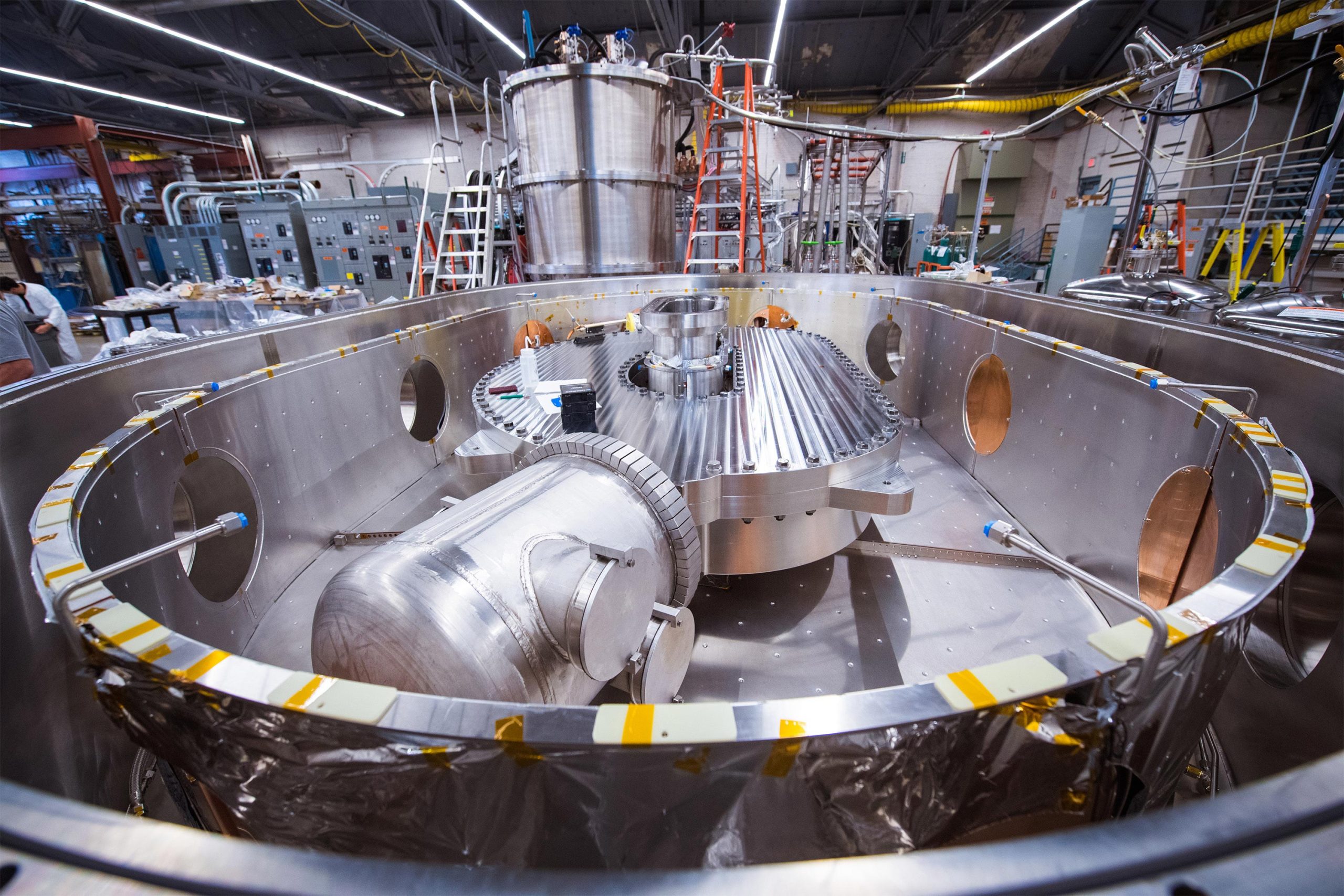
At its fundamental level, fusion power harnesses the energy released when atomic nuclei combine. While the principles of atomic fusion have been understood for decades – from the uncontrolled reaction of a hydrogen bomb to myriad experimental devices in laboratories worldwide – the challenge lies in achieving controlled, sustainable fusion. Experimental fusion devices have successfully demonstrated controlled reactions, with one notable instance even generating more energy than was initially required to initiate the reaction. However, none have yet produced a sufficient net energy surplus to make a practical power plant feasible.

Related Post
To overcome this critical hurdle, fusion startups are exploring a diverse array of technological pathways. While experts hold varying opinions on which approach offers the greatest promise, the industry remains in its nascent stages, meaning no single method is guaranteed success. Below is an overview of the leading strategies currently being developed.
Magnetic Confinement: Taming the Plasma
One of the most extensively researched and implemented techniques is magnetic confinement. This method employs incredibly powerful magnetic fields to contain and control plasma – the superheated, ionized gas that forms the core of a fusion reaction.
The strength required for these magnets is extraordinary. Commonwealth Fusion Systems (CFS), for example, is fabricating magnets capable of generating magnetic fields of 20 tesla, approximately 13 times more potent than those found in a typical MRI machine. To manage the immense electrical currents involved, these magnets are constructed from high-temperature superconductors, which still necessitate cooling to an extreme -253°C (-423°F) using liquid helium. CFS is currently on an accelerated timeline, constructing its demonstration device, Sparc, in Massachusetts, with an anticipated activation in late 2026. If successful, the company plans to commence construction of Arc, its commercial-scale power plant, in Virginia during 2027 or 2028.
Within magnetic confinement, two primary device architectures dominate: tokamaks and stellarators.
Tokamaks, first conceptualized by Soviet scientists in the 1950s, have been extensively studied. These devices typically feature a toroidal (doughnut-like) shape, often with a D-shaped cross-section, or a spherical design with a central aperture. Significant experimental tokamaks include the Joint European Torus (JET), which operated in the UK from 1983 to 2023, and ITER, a colossal international project slated to begin operations in France in the late 2030s. UK-based Tokamak Energy is actively developing its spherical tokamak design, with its ST40 experimental machine currently undergoing upgrades.
Stellarators represent the other major type of magnetic confinement device. While also containing plasma within a doughnut-like configuration, stellarators distinguish themselves with their intricate, twisted, and irregular shapes. Unlike tokamaks, which force plasma into a geometrically regular form, stellarators are designed by modeling plasma behavior and tailoring the magnetic field to accommodate its inherent complexities, rather than imposing a rigid structure. The Wendelstein 7-X, a large stellarator featuring modular superconducting coils operated by the Max Planck Institute for Plasma Physics, has been operational in Germany since 2015. Several startups, including Proxima Fusion, Renaissance Fusion, Thea Energy, and Type One Energy, are also actively developing their own stellarator designs.
Inertial Confinement: Imploding Towards Fusion
The second principal strategy for achieving fusion is inertial confinement. This approach involves rapidly compressing small fuel pellets until the atoms within them fuse.
The majority of inertial confinement designs utilize precisely timed pulses of laser light to achieve this compression. Multiple laser beams fire simultaneously, converging their powerful pulses onto the fuel pellet from all directions. This method has achieved a crucial milestone known as scientific breakeven, where the fusion reaction releases more energy than was consumed to initiate it. These groundbreaking experiments have taken place at the National Ignition Facility (NIF) at the Lawrence Livermore National Laboratory in California. It’s important to note that the measurement of scientific breakeven in these instances typically does not account for the total electricity required to power the entire experimental facility.
Despite this caveat, nearly a dozen startups are sufficiently convinced by the promise of inertial confinement to design commercial reactors around it. Focused Energy, Inertia Enterprises, Marvel Fusion, and Xcimer are prominent examples leveraging laser-driven compression. Beyond lasers, two companies are exploring alternative compression methods: First Light Fusion proposes using high-velocity pistons, while Pacific Fusion plans to employ electromagnetic pulses.
The Horizon of Fusion Innovation
While magnetic and inertial confinement represent the two dominant paradigms in fusion research, they are by no means the only avenues being explored. The field is rich with innovative alternative designs, including magnetized target fusion, magnetic-electrostatic confinement, and muon-catalyzed fusion, each presenting unique engineering challenges and potential advantages. As the global energy landscape evolves and the race for sustainable power intensifies, the advancements in fusion technology, fueled by significant investment and groundbreaking research, promise a future where the power of the stars might indeed light our homes.
Tim De Chant is a senior climate reporter at Hustler Words. He has contributed to a diverse range of publications, including Wired magazine, the Chicago Tribune, Ars Technica, The Wire China, and NOVA Next, where he served as founding editor. De Chant also lectures in MIT’s Graduate Program in Science Writing and was awarded a Knight Science Journalism Fellowship at MIT in 2018, focusing on climate technologies and new journalism business models. He holds a PhD in environmental science, policy, and management from the University of California, Berkeley, and a BA in environmental studies, English, and biology from St. Olaf College. He can be reached at [email protected].




Leave a Comment