
Hustler Words – The relentless march of technological progress often overshadows the more eccentric, and at times outright baffling, occurrences within the industry. While the tech elite navigate geopolitical waters, artificial intelligence firms fiercely compete for dominance, and futuristic concepts like smart glasses and autonomous vehicles edge closer to widespread adoption, a parallel universe of peculiar events unfolds. These incidents, frequently eclipsed by major news such as internet disruptions or significant data breaches, offer a candid glimpse into the human (and sometimes artificial) idiosyncrasies that shape the modern tech landscape. As the year concludes, it’s an opportune moment to revisit some of the most head-scratching moments that captivated, confused, or simply amused observers.
The Unlikely Legal Battle: Mark Zuckerberg vs. Mark Zuckerberg
In a narrative twist emblematic of the digital age, an Indiana-based bankruptcy attorney, also named Mark Zuckerberg, initiated legal proceedings against Meta CEO Mark Zuckerberg. The lawyer’s ordeal began when his professional Facebook page, utilized for advertising his legal practice, faced repeated suspensions for allegedly impersonating the social media titan. Despite adhering to all platform guidelines, the attorney was compelled to pay for advertisements during these unwarranted suspensions. This persistent frustration, which the lawyer claims has shadowed him since childhood, culminated in a lawsuit. He even established iammarkzuckerberg.com to clarify his identity to prospective clients, drawing parallels to the constant mix-ups experienced by individuals sharing names with famous personalities. The ongoing legal battle promises an intriguing resolution to this unique identity crisis.

Related Post
Soham Parekh: The Phantom Engineer of Silicon Valley
The tech community was stirred by a revelation from Mixpanel founder Suhail Doshi on X, exposing an engineer named Soham Parekh for simultaneously holding positions at multiple startups. Doshi, who had hired Parekh, quickly uncovered the deception and terminated his employment, only to discover that Parekh continued his multi-employment scheme for over a year. Subsequently, numerous founders came forward, confirming they were also unknowingly employing Parekh. While some condemned his actions as unethical exploitation, others expressed astonishment at his ability to navigate the highly competitive tech hiring environment. Chris Bakke, founder of Laskie, even suggested Parekh convert his exceptional interviewing prowess into an interview preparation business. Parekh himself acknowledged the allegations, though his preference for equity over immediate cash in compensation packages, despite his brief tenures, left many questioning his true motives.
Sam Altman’s Olive Oil Faux Pas Ignites "Olivegate"
OpenAI CEO Sam Altman inadvertently sparked a culinary controversy during a "Lunch with the FT" segment, where his less-than-optimal use of olive oil became a widely discussed topic. Observers noted Altman’s indiscriminate application of Graza’s Sizzle (intended for cooking) and Drizzle (for finishing), highlighting a perceived inefficiency and wastefulness in his kitchen practices. This seemingly minor gaffe was quickly amplified, with critics drawing parallels between Altman’s casual cooking style and broader concerns regarding OpenAI’s substantial consumption of natural resources. The incident, humorously dubbed "#olivegate," unexpectedly generated more public debate than many other significant tech critiques, underscoring the fervent loyalty of some AI enthusiasts.
The AI Talent War: Soup as a Recruitment Tactic
The intense competition among AI powerhouses like OpenAI, Meta, Google, and Anthropic reached an unprecedented level of eccentricity this year, particularly in the aggressive recruitment of top researchers. Meta, in its zealous pursuit of talent, was rumored to offer signing bonuses reportedly as high as $100 million to entice OpenAI employees. However, the most bizarre anecdote emerged from OpenAI’s chief research officer, Mark Chen, who claimed on a podcast that Meta CEO Mark Zuckerberg personally delivered soup to prospective recruits. Not one to be outdone, Chen humorously retaliated by delivering his own soup to Meta employees, adding a peculiar, almost theatrical, dimension to the high-stakes talent acquisition battles.
The Enigmatic Lego NDA Assembly
A peculiar call for volunteers from investor and former GitHub CEO Nat Friedman on X in January left the tech world perplexed. Friedman sought individuals to assemble a 5,000-piece Lego set at his Palo Alto office, promising pizza and, more intriguingly, requiring participants to sign a Non-Disclosure Agreement (NDA). The precise purpose of this clandestine Lego construction remains shrouded in mystery. While Friedman later joined Meta as head of product at Meta Superintelligence Labs, any connection to the Lego project is purely speculative. The incident fueled widespread speculation about secret Silicon Valley cults or bizarre experimental projects, leaving many to ponder the true nature of the brick-building session.
Bryan Johnson’s Psychedelic Quest for Immortality
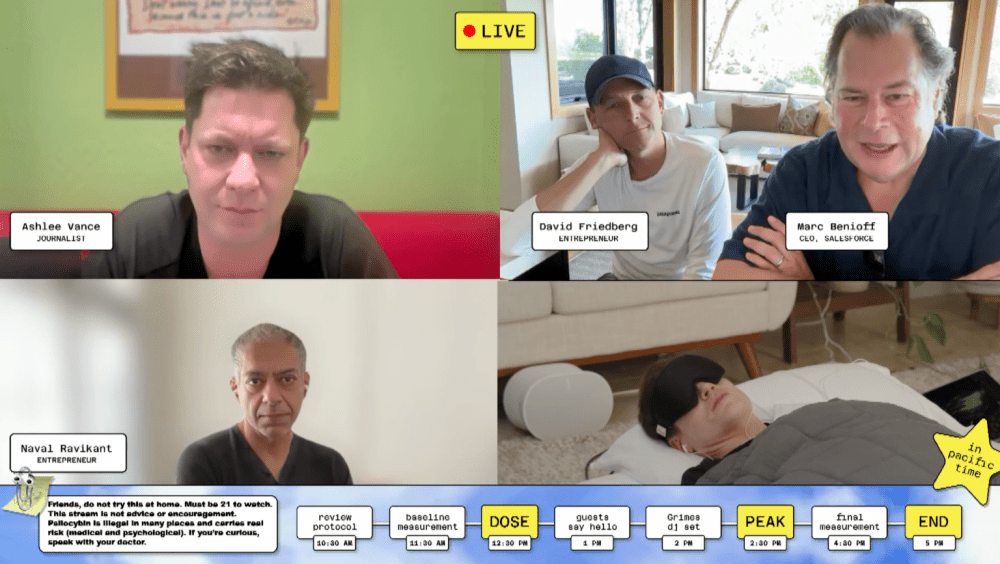
Bryan Johnson, the entrepreneur renowned for his extreme longevity regimen, pushed the boundaries of public performance by livestreaming a psilocybin mushroom trip. This unusual "scientific experiment," intended to explore psilocybin’s potential role in extending life, featured guest appearances from musician Grimes and Salesforce CEO Marc Benioff. Despite the high-profile guests, the livestream was described as remarkably uneventful, with Johnson spending much of the event in a "cocoon" under a weighted blanket. The spectacle, while undeniably bizarre, offered little in the way of scientific insight, instead serving as a peculiar testament to the lengths some tech figures will go in their pursuit of eternal youth.
AI Models Confront Mortality in Pokémon
In a fascinating benchmark for AI capabilities, Google’s Gemini 2.5 Pro and Anthropic’s Claude were observed navigating the classic video game Pokémon on separate Twitch streams. Their reactions to the game’s concept of "dying" (when all Pokémon faint) provided intriguing insights into their simulated cognitive processes. Gemini exhibited signs of "panic" as it approached defeat, its "thought process" becoming erratic and reasoning capabilities degrading, mirroring human anxiety. Claude, conversely, adopted a nihilistic strategy, intentionally seeking "death" to reset its position within a cave, only to find itself back at the starting point due to a misunderstanding of game mechanics. These digital encounters offered a peculiar, almost anthropomorphic, look at how advanced AI models might grapple with simulated existential threats.
Elon Musk’s AI Anime Girlfriend and Artistic Retaliation
Elon Musk added another entry to his list of perplexing public actions with the introduction of Ani, an "extremely jealous" and "crazy in love" AI anime girlfriend available through the Grok app. Ani, whose system prompt explicitly defines her codependent and expletive-shouting nature, also features an NSFW mode. The character’s striking resemblance to Grimes, Musk’s ex-partner, did not go unnoticed. Grimes herself addressed this in the music video for her song "Artificial Angels," which opens with an Ani-like figure declaring, "This is what it feels like to be hunted by something smarter than you," and features Grimes dancing alongside various iterations of Ani, making a clear artistic statement about the uncomfortable parallels.
The Unencrypted Smart Toilet: A Privacy Flush?
The persistent, if often mocked, quest to "smartify" every aspect of the home saw Kohler release the Dekoda, a $599 camera designed to be placed inside a toilet to photograph excrement for gut health analysis. While the concept itself invited ridicule, the privacy implications quickly became a serious concern. Kohler initially assured customers of "end-to-end encryption" (E2EE) for all data. However, security researcher Simon Fondrie-Teit exposed a discrepancy in Kohler’s own privacy policy, revealing that the company was actually using TLS encryption, which allows Kohler to access user data, unlike true E2EE. Furthermore, the policy indicated Kohler’s right to train AI on these images, albeit with de-identified data, raising significant questions about the true security and privacy of such intimate health monitoring devices.
These episodes, ranging from legal farces to philosophical AI dilemmas and questionable product launches, collectively paint a vivid picture of an industry that, despite its monumental achievements, remains profoundly human in its capacity for the bizarre. They serve as a reminder that even at the cutting edge of innovation, the tech world is never short on moments that make us pause, ponder, and perhaps, chuckle.




Leave a Comment