
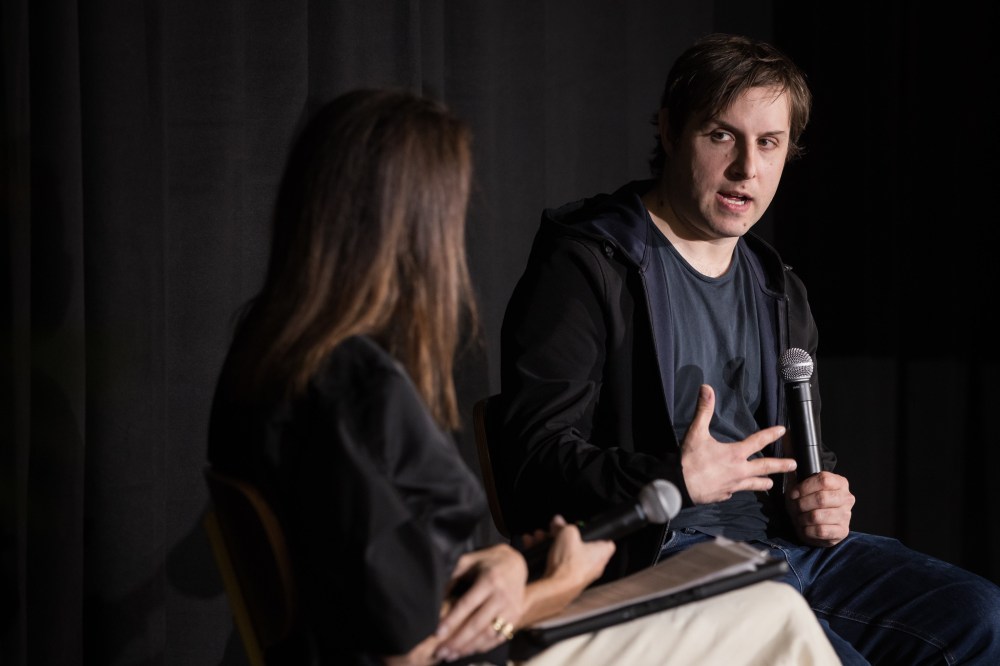
Hustler Words – Six years ago, at a San Francisco event, OpenAI’s Sam Altman quipped about asking AI for monetization strategies, a statement met with laughter. Now, facing Max Hodak, co-founder of Science Corp., that moment resonates. Hodak, a former Neuralink executive, isn’t just building brain-computer interfaces (BCIs); he’s envisioning a future where consciousness transcends individual brains, merging with machines and even other minds.
Hodak’s Science Corp. is quietly making strides in the BCI field, joining the ranks of Microsoft, Apple, and even China, which has ambitious plans for BCI dominance. While Hodak acknowledges that much of the underlying neuroscience isn’t new, he emphasizes the engineering breakthroughs that make implantable devices like Neuralink’s a reality.
Science Corp.’s immediate focus is Prima, a retinal implant that restores vision to those with macular degeneration. This technology, acquired from Pixium Vision, has shown promising results in clinical trials, with 80% of patients regaining the ability to read. Hodak anticipates a European launch next summer, with FDA approval in the U.S. pending.

Related Post

Beyond Prima, Science Corp. is exploring optogenetic gene therapy, aiming to make neurons light-sensitive and controllable without electrodes. But the ultimate goal is even more ambitious: growing new brain tissue. Hodak envisions a "waffle grid" device that sits on the brain’s surface, nurturing engineered neurons that integrate with existing neural circuits.
Hodak believes BCIs are fundamentally linked to longevity, with the potential to crack the code of consciousness itself. He envisions a future where multiple brains could work together, forming a unified consciousness. While this may sound like science fiction, Hodak has timelines and regulatory pathways in mind.
By 2035, Hodak predicts that biohybrid neural interfaces will be available for patients in need, transforming the world in profound ways. He acknowledges that these technologies will initially be reserved for serious brain surgeries, but as they improve and become safer, the patient population will expand.
Hodak also raises concerns about the economic implications of BCI technology. He argues that the current healthcare system may not be able to handle the increased costs associated with life-extending BCI treatments, potentially creating a divide between those who can afford cognitive enhancements and those who cannot.
While Hodak acknowledges the potential societal challenges, he remains optimistic about the future of BCI technology. He believes that it has the potential to cure diseases, extend lives, and ultimately, reshape human consciousness.
Plagiarism Pass: 95%




Leave a Comment