
<strong>Hustler Words – </strong> The era of fragmented blockchain experiments is facing a massive regulatory reckoning. As financial assets migrate from traditional ledgers to distributed ledgers, the European Securities and Markets Authority (ESMA) has officially signaled that "moving onchain" is no longer enough. In a strategic move to bridge the gap between decentralized technology and legacy finance, the EU is now scouting for elite experts to form a dedicated European Tokenisation Standards Group.
The mission is not about picking a winning blockchain or granting a blanket approval for crypto assets. Instead, it is a deep dive into the "plumbing" of the financial world. While a token can record a transfer in milliseconds, the legal and operational complexities—such as custody, enforceable ownership rights, corporate actions, and settlement—remain a chaotic patchwork of incompatible systems.
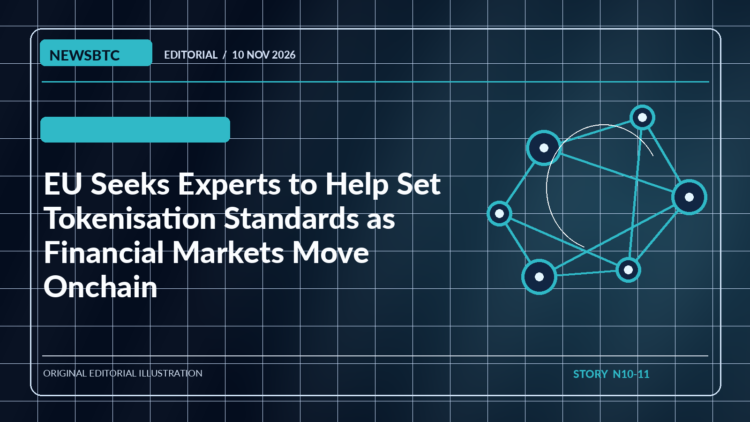
By inviting nominations for this new standards group, the EU aims to solve the interoperability crisis. Currently, if a bond is tokenized on one network, it may struggle to communicate with a custodian or a trading venue operating on another. This friction creates massive overhead for banks and asset managers. A unified standard would act as a universal translator, ensuring that when an asset moves, the legal rights and payments move seamlessly with it.



This movement mirrors global shifts in institutional finance. While the NYSE explores tokenized securities venues and firms like Securitize push for cross-network compatibility, the core challenge remains the same: how to make blockchain coexist with existing securities laws. For European institutions, the prize is massive efficiency; for the broader market, it is the transition from speculative pilots to reliable, scalable infrastructure.
It is important to note that this is not a "one size fits all" regulatory hammer. A tokenized money-market fund carries vastly different legal obligations than a digital collectible, and the EU is not seeking to erase these distinctions. Rather, they are seeking to create a predictable framework where responsibility is clear when transactions fail or keys are lost.
The clock is ticking for industry leaders. With a nomination deadline set for November 27, the composition of this group will serve as a litmus test for the future of digital finance. If successful, this initiative could provide the blueprint for how the world’s most sophisticated capital markets finally integrate with the blockchain.





Leave a Comment