
<strong>Hustler Words – </strong>The long-awaited era of driverless freight just cleared a major regulatory hurdle. In a significant victory for the autonomous trucking sector, industry leaders Aurora Innovation and Kodiak AI have secured a federal exemption that resolves a fundamental logistical paradox in self-driving technology.
For years, a specific safety regulation acted as a "roadblock" for commercializing autonomous heavy-duty vehicles. Under current federal mandates, if a traditional semi-truck experiences a mechanical failure, a human driver is required to exit the vehicle and manually deploy reflective warning triangles on the roadway within 10 minutes. This requirement presented an impossible scenario for autonomous rigs: there is no human operator to step out and place physical markers on the asphalt.
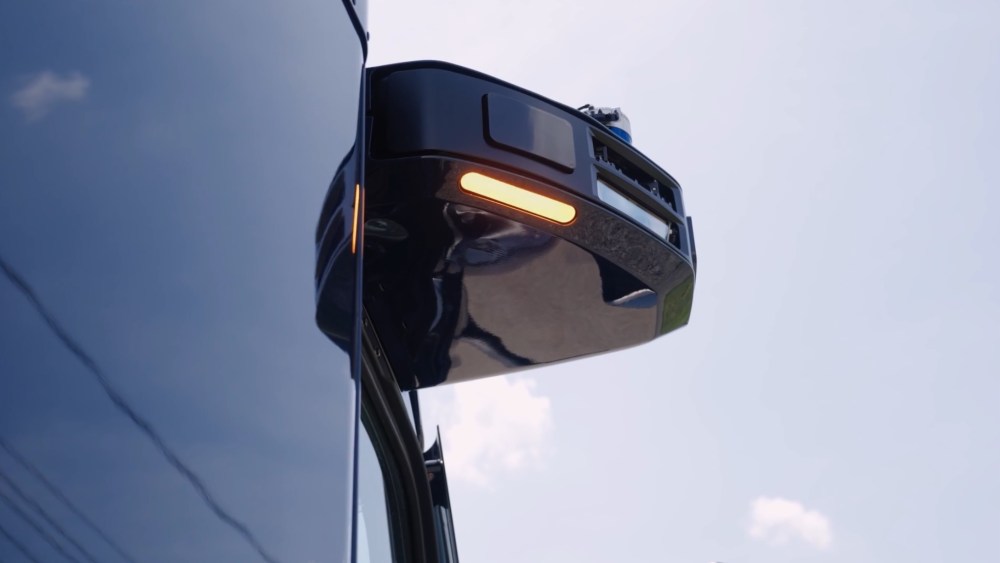
The legal battle to resolve this was intense. Aurora Innovation had previously challenged these requirements in court, eventually escalating the matter to the District of Columbia Court of Appeals. The tension finally broke this week when the Federal Motor Carrier Safety Administration (FMCSA) granted a five-year exemption. This allows autonomous fleets to replace manual roadside triangles with high-visibility, cab-mounted warning beacons.



Industry experts view this as a turning point. Daniel Goff, VP of External Affairs at Kodiak AI, noted that this move paves the way for a more efficient and safer autonomous freight ecosystem. Similarly, Aurora’s Gerardo Interiano highlighted that these 21st-century beacons enhance safety by alerting motorists immediately without requiring a person to enter a dangerous roadside environment.
The Autonomous Capital Surge
While the regulatory landscape shifts, the financial landscape is moving just as fast. Waymo, the autonomous driving powerhouse under Alphabet, has pivoted its funding strategy by securing a massive $5 billion debt financing round. Led by heavyweights like PIMCO and Blackstone, this capital injection is intended to fuel Waymo’s aggressive expansion into new markets across the United States, Europe, and Japan.
Other notable movements in the mobility and deep-tech sectors include:
- Parallel Systems: The freight-moving rail startup successfully closed a $100 million Series C round to advance its operator-less heavy-load rail technology.
- Flai: An AI-driven software provider for automotive dealerships, secured $27 million in Series A funding to automate dealership operations.
- Uber’s Expansion: In a major strategic move, Uber has reached an agreement to acquire catering giant ezCater in a deal valued at $2.3 billion.
Industry Shifts and Turbulence
It isn’t all smooth sailing for the tech giants. Redwood Materials, the battery recycling firm founded by Tesla co-founder JB Straubel, appears to be undergoing a significant leadership shakeup following a recent restructuring. Reports indicate that several high-level executives, including VPs of engineering and operations, have departed the company.
Meanwhile, Tesla continues to navigate international regulatory waters. Following pressure from German authorities, the company has rebranded its advanced driver assistance system in Europe to "Tesla Assisted Driving," moving away from the "Full Self-Driving" moniker to better align with local expectations.
As these technologies move from prototype to the pavement, the question remains: will these new safety standards, like the cab-mounted beacons, eventually become the mandatory baseline for the entire global trucking industry? Only time—and more data—will tell.



Leave a Comment