
<strong>Hustler Words – In a rapidly shifting landscape where AI agents are becoming the new standard for digital productivity, Wabi is making a strategic move to redefine how we interact with artificial intelligence. Originally known as a platform that allowed users to build applications through simple text prompts, the startup is undergoing a significant pivot. Instead of remaining a standalone "vibe-coding" tool, Wabi is evolving into a sophisticated AI-driven messaging ecosystem designed to bridge the gap between conversation and functional software.
The evolution, dubbed Wabi 2.0, is led by founder Eugenia Kuyda, the visionary behind the AI companion startup Replika. According to Kuyda, the goal is to move beyond the limitations of traditional chat interfaces. While current AI models like Meta’s Muse or Instinct rely heavily on text-based interactions, Wabi 2.0 aims to act as a "personal agent" that generates custom user interfaces (UIs) on the fly. This means that instead of endlessly scrolling through a chat history to find information, users can interact with purpose-built tools created instantly by the AI.
This shift comes at a critical time for the industry. As giants like OpenAI experiment with integrating interactive experiences directly into ChatGPT, Wabi is carving out a niche that prioritizes usability. Kuyda noted in a recent post on X that "chat-only" agents often suffer from a cluttered user experience, where vital tasks and histories become lost in a sea of text. "People don’t just want to type-type-type; they want to tap-tap-tap, scroll, and look," Kuyda explained, emphasizing that the most effective AI will be the one that marries conversational intelligence with intuitive software design.

Related Post

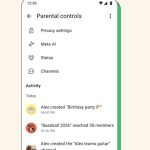
The practical applications of this "agentic OS" are vast. For a fitness enthusiast, Wabi could instantly manifest a calorie tracker or a weightlifting log within the chat interface. For a busy parent, the agent might generate a shared family calendar or a localized event tracker for children’s activities. By merging personal agents, custom-built apps, and social connectivity into a single hub, Wabi is attempting to build a digital environment that adapts to the user’s life rather than forcing the user to adapt to a rigid chat window.
Currently, Wabi 2.0 is in an exclusive phase, accessible only via invite codes being distributed through the platform X. As the race for the ultimate AI assistant intensifies, Wabi’s pivot suggests that the future of AI isn’t just about talking—it’s about doing.




Leave a Comment