
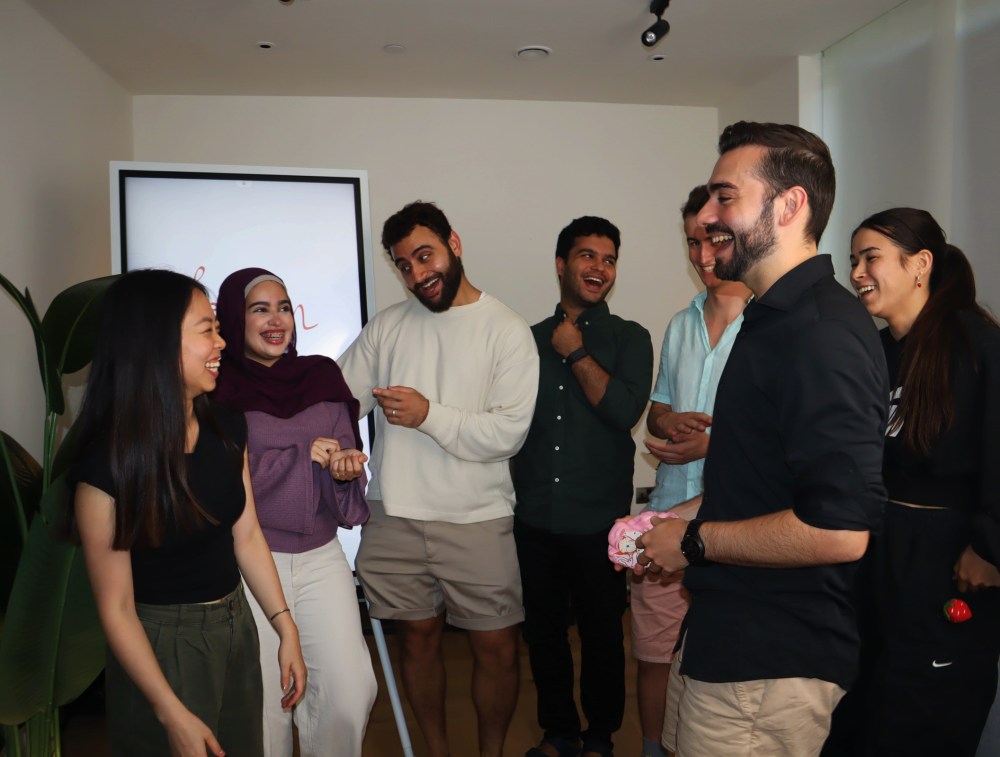
Hustler Words – In a striking departure from Silicon Valley’s relentless "hustle culture," a unique co-living and co-working space in East London is redefining what it means to build a successful startup. Dubbed the London Island Founder House, or "Lift House," this innovative hub, home to six founders in their twenties, champions a philosophy of "holistic improvement in life" over the intense, often unsustainable, sprint towards a Demo Day. This initiative signals a growing trend among UK founders to cultivate robust companies without sacrificing well-being, a movement some are calling "Londonmaxxing."
Nestled within a modern East London development, the six-story Lift House, established in March, has been home to Rowan Aldean, 26, and his wife Zahraa, 22, since May. Aldean, who successfully exited his previous venture last year for millions, now helms an applied AI startup focused on agent deployment strategies. The house’s name, "Lift," is dual-purposed, referring both to its elevator and its core mission to uplift tech founders. Unlike San Francisco, where dozens, if not hundreds, of hacker houses dot the landscape, London boasts only a handful of such co-living arrangements, making Lift House a distinctive entity in the city’s burgeoning tech scene.
The ethos of Lift House stands in stark contrast to the often-mythologized, sometimes extreme, conditions of its San Francisco counterparts. Stories abound of Bay Area hacker houses operating illegally in warehouses, hosting extravagant galas, or enforcing grueling "996" work schedules involving 72-hour sprints. Aldean dismisses such performative extremes, drawing parallels to UK success stories like DeepMind, which achieved frontier innovation and even Nobel prizes without ostentatious displays.

Related Post

London’s tech ecosystem, particularly its booming AI sector, is experiencing a surge in morale and investment. In 2026 alone, London AI startups have collectively raised $12 billion, contributing to the city’s total of $14.7 billion in startup funding. Notable companies like Wayve, Superintelligence, ElevenLabs, Recursive, Ineffable Intelligence, and Isomorphic Labs (the latter three founded by DeepMind alumni) have each secured over $500 million. This vibrant environment is inspiring a new generation of founders, including those at Lift House, to pursue ambitious goals with a distinctly British approach.
Life at Lift House is characterized by flexibility and a deliberate emphasis on balance. Residents, whose stays range from a month to six months or more, manage their own groceries, often sharing meals and cooking duties. Cleaning responsibilities are communally divided. While rent details remain private, the shared commitment to a balanced lifestyle is openly discussed.
A cornerstone of this balanced approach is the weekly Sunday journaling session, introduced by David Amor, 28, a brain coaching and training entrepreneur. This practice encourages residents to reflect on their time spent in nature, dietary habits, and physical activity, fostering self-awareness and well-being. Luke, 27, who runs an AI-marketing company, attests to the positive impact, noting improved eating habits, increased workouts, and better sleep. Even simple acts, like consistently having lunch, have become part of his healthier routine. Beyond individual practices, Tuesdays are dedicated to team volleyball in a local league, while evenings might feature Wan Ying L, 25, playing piano, group board games like Catan, or cultural outings to art exhibitions. Presence Plumb, 25, a tech strategist, frequently hosts rooftop dinner parties, celebrating the house’s diverse nationalities with themed dishes and fostering discussions among founders, researchers, and investors. She describes the London ecosystem as "calmer, balanced, authentic," seeking a broader experience beyond the "startup tech bro vibe."
Workdays at Lift House are structured around individual preferences. Amor begins his day at 8 a.m. with focused work, followed by a cold shower to boost dopamine. Luke and his co-founder, Varun, 27, start around 9 a.m. with a team call, often with Varun traveling to Lift House for co-working. Aldean, conversely, typically starts his day later, around 10 a.m., unless critical investor calls necessitate an earlier start. When pressed on what makes Lift House uniquely British, Aldean light-heartedly points to communal tea-drinking, contrasting it with San Francisco’s filtered coffee culture. More profoundly, he highlights the distinct pressures British founders face: a cultural aversion to risk, a preference for humility, and the "tall poppy syndrome," where success can invite scrutiny and criticism. This fosters a cautious approach to publicly celebrating achievements.
Despite these cultural nuances, London remains an attractive hub for early-stage founders, offering a robust network, accessible early capital, and a rich life beyond the tech sphere. Amor emphasizes the city’s diversity, providing endless opportunities for engagement, from founder-led clubs to wellness events and jazz nights. Luke and Varun, for instance, leveraged the UK government’s SEIS/EIS schemes to attract angel investments, providing tax incentives that make local funding more appealing.
Aldean, drawing from his own experience in Bay Area hacker houses, describes London’s ecosystem as less cutthroat. He recalls a competitive environment in Silicon Valley where desks faced walls, fostering heads-down product development, and where gossip was rampant. In contrast, London’s professional interactions are less prone to backbiting. Furthermore, London startups often target slow-moving large corporations rather than exclusively selling to other startups, reducing the need for internal posturing. Varun and Luke also note a difference in customer acquisition: while the US market offers "quick wins," closing a customer in the UK, though harder, often results in longer-term loyalty.
However, the allure of the US market remains a powerful force. While the UK offers access to top talent from institutions like Oxbridge and a convenient time zone for global collaboration, the US presents the world’s largest economy and a vast pool of investors willing to write substantial checks across all funding stages. This creates a "factory line" dynamic, as Varun puts it, where UK startups often expand to the US. Investors frequently push for relocation; Luke and Varun recount a Miami investor making such a demand, a common practice that highlights the tension beneath Europe’s tech ecosystem. Despite their affection for London, the duo is already expanding into the US and hasn’t ruled out a move to be closer to their customers.
Plumb acknowledges this challenge, stating, "I work with a lot of people trying to support the European ecosystem more." Aldean adds, "Founders talk about London; everyone is bullish on the country until they get the opportunity to leave."
With about a year left on its lease, Lift House residents hope to continue their experiment in balanced innovation. While London sees various short-term tech gatherings and global co-living networks like The Residency and BaseJump are expanding into the city, Lift House stands out for its distinct philosophy. It contrasts sharply with earlier London hacker house models, such as "The London Founder House," which famously prioritized relentless work over work-life balance and required significant prior funding.
For Lift House, prospective residents must demonstrate a hobby outside of work and an interest in fitness—a clear signal of its commitment to a holistic lifestyle. This is the core appeal of the "Londonmaxxing" movement: the promise that founders can achieve success without burning out. As Aldean eloquently states, "The culture is to build something that lasts, not necessarily burn out chasing a flash." This philosophy, chronicled by Hustler Words, offers a compelling alternative to the traditional tech grind.





Leave a Comment